
March 2, 2026

Apology Text to My Wife After I Yelled – 3 Real Versions That Help Apology Text to My Wife After I Yelled: 3 Versions That Actually […]


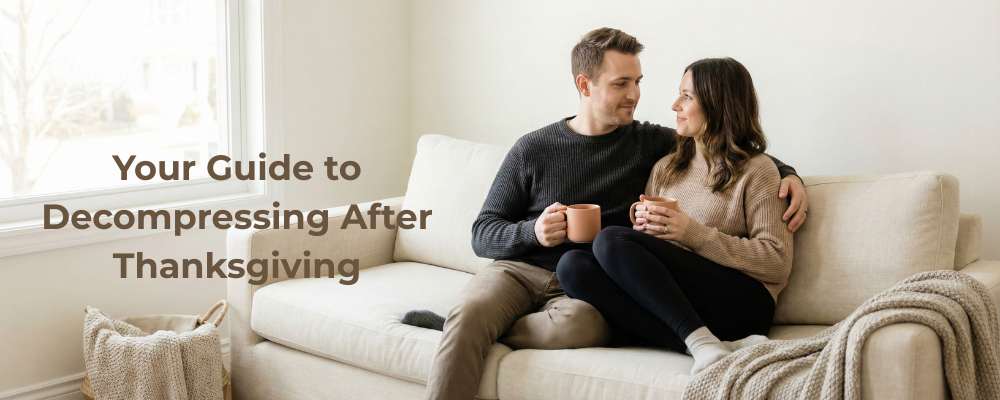
Feeling that post-holiday hangover? It's more than just turkey and travel fatigue. This is your practical, no-judgment guide for recovering from the physical, mental, and relational stress of Thanksgiving. We’ll cover everything from simple ways to reconnect with your partner to strategies for managing the emotional fallout, helping you both get back to feeling like a team again.
The silence is almost deafening, isn't it? The last relative has pulled out of the driveway, the good china is finally washed and put away, and the fridge is a terrifying game of Tetris. You both collapse on the couch, look at each other, and let out a sigh that’s part relief, part pure, bone-deep exhaustion. You survived. But now, in the quiet aftermath, you might feel a little... off. Disconnected. That’s completely normal. You’ve just run the Thanksgiving gauntlet.
Let’s be real. For every picture-perfect moment of gratitude, there were probably five stressful ones. The tense political conversation with Uncle Frank, the subtle critique from your mother-in-law, or just the sheer exhaustion of being "on" for three days straight. The art of navigating family drama after a holiday isn't something they teach you in school, and it can leave you and your partner feeling like you've been through a battle together, but not necessarily on the same side. The emotional hangover is no joke.
And that’s the tricky part. You’re supposed to be a team, but after days of juggling family expectations and logistics, your own connection can feel frayed. Maybe a small disagreement blew up because you were both stretched too thin. Or maybe you just haven't had a real, quiet moment to yourselves in what feels like an eternity. This is where managing post-holiday burnout as a couple becomes absolutely critical—it’s about more than just recovering, it's about reconnecting.
So, consider me your friend who’s dropping by with coffee and a game plan. I’m not here to give you a list of more chores. Instead, think of this as a permission slip to take a breath and focus on what really matters: you two. We’re going to walk through some simple, realistic steps to help you decompress physically, mentally, and financially. Because effectively managing post-holiday burnout as a couple is the key to heading into the December holidays feeling strong and united.
We'll talk about getting back to basics with some simple healthy habits after thanksgiving for two, without any guilt trips or crazy diets involved. Just gentle ways to feel human again. We'll also dive into the emotional side of things, because the biggest challenge is often navigating family drama after a holiday and the feelings that linger long after the guests have gone. It’s all about creating space for both of you to heal.
My goal here is to help you shake off that post-holiday funk and find your rhythm again. It's time to shift from "hosts" and "family mediators" back to being partners and friends. By prioritizing a few key healthy habits after thanksgiving for two, you can turn this recovery period into a powerful moment of reconnection. You’ve earned it. Let's get started.
Alright, let's start with the body. Because right now, your body is probably screaming at you. It’s bloated, it’s tired, and it’s been running on adrenaline, caffeine, and pie for 72 hours. The first rule of post-Thanksgiving recovery is to be kind to yourself. This isn’t the time for a punishing juice cleanse or a five-mile run fueled by guilt. It’s about a gentle return to feeling good in your own skin.
First things first: water. And lots of it. All that salt from the gravy, the stuffing, and the brine is making you retain water and feel sluggish. Guzzle water like it’s your job. If you’re bored with plain water, try herbal teas like peppermint (great for digestion) or a warm mug of bone broth. The goal is to flush your system, not starve it.
Forget crash dieting. Your body needs real, nourishing food. Think simple. A big salad with some leftover turkey, a hearty vegetable soup, or scrambled eggs with spinach. Focus on fiber and protein. These will keep you full and help stabilize the blood sugar rollercoaster you’ve been on. This is ground zero for establishing some healthy habits after thanksgiving for two; cook a simple, clean meal together.
I know the couch is calling your name. But trust me on this one: gentle movement is a game-changer. I’m not talking about a high-intensity workout. God, no. I’m talking about a walk around the neighborhood to look at the early holiday lights. Maybe a slow, stretchy yoga session in the living room. Find a 20-minute couple's yoga video on YouTube.
The point isn’t to burn calories; it’s to get the blood flowing and clear your head. When you move your body, you move your mood. Doing it together turns a chore into a point of connection. It’s a simple, powerful way to remind yourselves that you’re a team, even when you’re just trying to walk off that second slice of pumpkin pie.
That wall of Tupperware in your fridge isn’t just a food storage issue; it’s a source of mental clutter. Every time you open the door, it’s a reminder of the chaos. So, make a plan. Tonight, it's turkey and black bean soup. Tomorrow, it's sweet potato hash for breakfast. Saturday, you freeze the rest of the stuffing for Christmas.
Give yourselves a deadline—say, three days—to eat, freeze, or give away the majority of it. Reclaiming your fridge is a strangely satisfying act. It’s a tangible way of saying, "Okay, the marathon is over. We're back to normal now."
Let’s be honest, your sleep schedule is probably a complete wreck. Between hosting, traveling, and sleeping in a strange bed at your in-laws', you’re likely running on fumes. Reclaiming your sleep is non-negotiable. It affects your mood, your patience, and your ability to be a decent human being to your partner.
Tonight, commit to a hard stop. No screens an hour before bed. Make the bedroom a sanctuary—cool, dark, and quiet. Maybe take a warm bath with Epsom salts together. The simple act of winding down at the same time can do wonders for intimacy and connection. Your body, and your relationship, will thank you for it.
The physical exhaustion is one thing, but the mental fog is something else entirely. You’ve been managing personalities, navigating sensitive topics, and performing the role of the perfect host or guest. Your brain is tired. It’s time to give it a break and process everything you’ve just been through.
After days of constant togetherness with family, it’s easy to feel "peopled-out." And that can even include being tired of your partner. It’s okay! You both need space to breathe. Insist on it. One of you takes a long bath while the other reads a book in another room. Go for a solo walk.
This isn’t about avoiding each other; it’s about recharging your individual batteries so you can show up better for each other later. Once you’ve had that solo time, schedule some quiet, low-pressure "we time." No talking about chores or family drama. Just exist in the same space peacefully.
Your phone has been a fire hose of group texts, social media notifications, and frantic recipe searches. It’s time to turn it off. Seriously. Agree on a three-hour window where you both put your phones in a drawer and go completely analog.
Play a card game. Put on a record. Work on a puzzle. Or just sit and talk without a screen glowing in your peripheral vision. You will be amazed at how much your brain relaxes when it’s not being constantly pinged with notifications. It allows you to actually be present with the one person who matters most.
Ever feel a little sad or let down after a big event you were looking forward to? It’s a real thing. It’s called the post-holiday slump. The anticipation is gone, the excitement is over, and you’re left with the quiet and the mess. Research from the American Psychological Association consistently shows that a significant chunk of the population, around 38%, feels their stress increase during the holidays. That stress doesn't just vanish on Friday morning.
Check in with your partner. Ask, "How are you really doing?" and then just listen. Don't try to fix it. Just validate their feelings. "Yeah, it's a little weird how quiet the house is now," or "I get why you feel so drained." Acknowledging the emotional hangover is the first step to getting over it.
I know, I know. The last thing you want to do is clean. But I’m not talking about a deep scrub. I’m talking about a 30-minute reset. Put on your favorite music, and tackle the most obvious clutter together. Fold the throw blankets, clear the coffee table, put away the extra serving platters.
The act of restoring order to your physical environment has a profound impact on your mental state. You're not just cleaning up; you're symbolically clearing out the holiday chaos and making space for peace. It's a powerful ritual to close the chapter on the event and reclaim your sanctuary.
This is the big one. Your relationship is the foundation, and Thanksgiving can feel like a 4.0 earthquake. You've been tested. Now it's time to inspect the cracks and reinforce the structure. This is where the real work of managing post-holiday burnout as a couple happens, by focusing on each other above all else.
You need to talk about what just happened. But not when you’re both exhausted and cranky. Schedule it. Say, "Hey, on Sunday morning, can we grab a coffee and just talk through the holiday?" Create a safe space where you can both be honest without fear of starting another fight.
Ask gentle, open-ended questions. "What was your favorite part of the last few days?" followed by "What was the most stressful part for you?" This isn’t about blaming. It’s about understanding. You both experienced the same event, but likely through very different lenses. Hearing your partner's perspective is vital.
[Image of couple talking over coffee]Let’s get to the heart of it. Did your sister make a passive-aggressive comment about your cooking? Did your father-in-law bring up politics after you explicitly asked him not to? These things can’t just be swept under the rug. They fester. This is where the skill of navigating family drama after a holiday becomes so important for your partnership's health.
The key is to validate your partner's feelings first. "I'm so sorry my mom said that to you. You didn't deserve it, and I can see why it hurt your feelings." Present a united front. Decide together how you’ll handle it next time. This process of navigating family drama after a holiday as a team transforms it from a source of conflict between you into a challenge you face together.
Holidays blow up your routines. The small, daily rituals that keep you connected get lost in the shuffle. Did you stop having your morning coffee together? Did you stop kissing each other goodnight because you were just collapsing into bed? It's time to bring those back, immediately.
These rituals are the glue of your relationship. They signal normalcy, safety, and intimacy. Make a conscious effort to reclaim them. Tonight, make sure you connect, even if it's just five minutes of conversation before you fall asleep. It’s a powerful way to say, "We're back." Starting these healthy habits after thanksgiving for two again is critical.
You need to remember what it feels like to just be two people who like each other, without the pressure of family expectations. Plan a date that is the absolute opposite of Thanksgiving. No elaborate cooking. No dressing up. No performing.
Order a pizza and watch a dumb movie on the couch. Go to a bookstore and browse the aisles without saying a word. Grab a beer at a local brewery. The only goal is to enjoy each other's company. That's it. It’s a simple reset that can feel incredibly restorative.
Finally, let's talk about the other hangover: the financial one. The cost of travel, groceries for twenty people, new outfits... it adds up, and that stress can easily spill over into your relationship, creating a whole new layer of tension.
Take a deep breath. Sit down together with your bank and credit card statements and just... look. Add it all up. The number might be scary, but hiding from it is worse. The most important rule here is this: no blame, no shame. You made spending decisions as a team (even if they were unspoken), and now you're looking at the results as a team.
It’s just data. It’s information you can use to make a plan. Pointing fingers about who bought the expensive wine or the fancy decorations is a recipe for disaster. This is step one in effectively managing post-holiday burnout as a couple, because financial anxiety is one of the fastest routes to exhaustion.
Okay, you have the number. Now what? You make a new plan for December. This doesn't have to be punitive. It's just a course correction. Maybe you cut back on eating out. Maybe you agree to a smaller budget for your own holiday gifts to each other.
Find a few areas where you can trim the fat for the next four weeks to help offset the Thanksgiving bill. Working on this together reinforces your partnership and gives you a shared goal, which can actually bring you closer.
Here’s how you turn this year's stress into next year's peace of mind. Take that total amount you spent on Thanksgiving and divide it by 12. That’s how much you need to set aside each month to have a fully-funded holiday next year. Open a separate high-yield savings account and label it "Holiday Fund."
Automate the transfer. By the time next November rolls around, the money will just be sitting there, waiting for you. This single move can eliminate a massive source of holiday stress and stop the cycle of starting the new year in debt.
You don’t need to spend money to have fun and reconnect. In fact, after a spending-heavy holiday, it can be liberating to do the opposite. Make a list of all the free things you could do together in December.
Drive around and look at holiday lights with thermoses of hot chocolate. Volunteer at an animal shelter for an afternoon. Have a marathon of your favorite holiday movies at home. Go for a hike. Shifting your focus to free activities alleviates financial pressure and reminds you that your connection is what matters, not your consumption.
After the whirlwind of Thanksgiving, many couples experience a "post-holiday hangover," feeling physically drained, emotionally frayed, and disconnected. Surviving the holiday gauntlet of travel, overindulgence, and family dynamics often leaves partnerships strained. Recovery requires an intentional, multi-faceted approach to decompress and reconnect as a team.
This guide provides a roadmap for that recovery, focusing on four key areas. It begins with a physical reset, emphasizing gentle nourishment, hydration, and restorative movement over punishing diets or workouts. It then moves to mental and emotional decompression, suggesting strategies like digital detoxes and scheduled alone time to clear the mental clutter.
The process also involves direct relational recovery through open communication about the holiday's highs and lows, re-establishing couple rituals, and addressing any lingering family-related tensions. Finally, it tackles the financial hangover by encouraging a blame-free review of spending, budget adjustments, and proactive planning for future holidays, ensuring couples can move into the next season feeling united and resilient.
It's very common for partners to have contrasting recovery styles; one person might crave solitude while the other seeks connection. The key is open communication and respecting each other's needs without judgment. The "Me Time" and "We Time" concept is crucial here. Actively schedule periods for individual recharging. This could mean one partner takes a long, quiet bath or goes for a solo walk while the other reads a book or listens to music in a separate room. This isn't about avoidance; it's about refilling individual energy reserves.
Once both partners have had a chance to breathe independently, it becomes easier to engage in low-pressure "We Time." This shared time should be intentionally simple and restorative, like watching a movie, playing a card game, or just sitting together quietly. By acknowledging that both solo and shared decompression are valid and necessary, you can create a balanced recovery plan that honors both of your needs. This approach prevents resentment and helps you show up for each other as more patient, present partners.
The most effective approach is to be gentle and focus on nourishment, not punishment. Guilt is an unproductive emotion that often leads to cycles of restriction and overindulgence. Instead of a drastic cleanse or a grueling workout, start with the basics. Prioritize hydration by drinking plenty of water or herbal tea to help flush out excess sodium and rehydrate your system. Shift your diet back to simple, whole foods like fiber-rich vegetables, lean proteins (such as leftover turkey), and whole grains. Cooking a simple, healthy meal together can be a great reconnecting activity.
Incorporate gentle movement into your routine. This isn't about burning calories from pie; it's about improving your mood, boosting circulation, and clearing your head. A brisk walk in the neighborhood, a stretching session, or a bike ride together can feel restorative. By framing these actions as acts of kindness to your body rather than a penalty for holiday fun, you remove the guilt and re-establish healthy habits from a positive, sustainable mindset.
Arguments during high-stress events are almost inevitable because patience is thin and exhaustion is high. The best way to move forward is to hold a "State of the Union" debrief once the dust has settled. Schedule a specific time to talk when you are both calm and rested, perhaps over coffee on a quiet morning. The goal is not to re-litigate the fight or assign blame, but to understand each other's perspectives. Start with open-ended questions like, "What was the most stressful part of the holiday for you?"
Listen to your partner's experience and validate their feelings, even if you saw the situation differently. Often, holiday arguments stem from external pressures, not fundamental issues in the relationship. Acknowledging this can diffuse the tension. Afterward, focus on intentionally re-establishing your daily couple rituals—the small points of connection like a goodnight kiss or sharing a morning drink. These simple routines signal a return to normalcy and reinforce your bond, showing that you are a team that can weather the storm and find its way back.
When a comment from an extended family member causes pain, the priority is to support each other and present a united front. The first and most critical step is for the non-affected partner to validate the other's feelings completely. Say something like, "I'm so sorry that was said to you. That wasn't fair, and I understand why you're hurt." This immediate show of solidarity prevents the issue from driving a wedge between you. Avoid defending the family member or downplaying the comment's impact, as that can feel like a betrayal.
Once you have affirmed your support, you can discuss the situation as a team. Decide together if the issue needs to be addressed directly or if the best path forward is to create emotional distance and stronger boundaries for future interactions. This collaborative process turns the hurt from a personal wound into a shared problem to solve. Planning how you will handle similar situations in the future—perhaps with a code word to signal discomfort or a pre-planned exit strategy—empowers you both and reinforces that your partnership comes first.
Setting effective boundaries for future holidays begins with your post-Thanksgiving debrief. While the experience is still fresh, sit down as a couple and identify the specific situations, conversations, or dynamics that caused the most stress. Was it unsolicited advice, pressure to stick to a rigid schedule, or debates over sensitive topics? Get clear on exactly what your pain points were. The American Psychological Association has found that for 38% of people, stress actually increases during the holidays, often due to these very family pressures.
Once you have identified the issues, work together to create a unified plan. This might involve communicating your boundaries clearly and kindly before the next gathering (e.g., "We're excited to see everyone, but we've decided to make politics a topic we avoid this year to keep things positive."). It could also involve creating internal strategies, like agreeing to take a walk together if things get tense or deciding ahead of time how long you will stay at a particular event. The key is agreeing on the plan together so you can support each other in enforcing it.
Financial strain after a holiday is a major source of tension, so tackling it proactively and as a team is essential. The first step is to review the spending together, without blame. Frame it as an information-gathering session to understand the total cost of the holiday, from travel to groceries. This is simply data that will empower you to plan better in the future. Assigning blame for who bought what will only lead to a fight and solve nothing.
With a clear picture of the spending, collaboratively adjust your budget for the upcoming month. Identify a few areas, like dining out or entertainment, where you can temporarily cut back to offset the holiday costs. This shared goal can strengthen your partnership. To prevent future stress, use this year's total cost to create a sinking fund for next year. By automatically saving a small amount each month in a dedicated account, you can face the next holiday with the funds already set aside, transforming a major source of anxiety into a manageable, planned expense.
This article synthesizes expert advice on relational health and stress management. The data point regarding holiday stress levels is drawn from research conducted by the American Psychological Association. For individuals seeking more in-depth strategies, the following resources provide valuable guidance on maintaining psychological well-being and strong partnerships during high-pressure periods.
Feeling that post-holiday hangover? It's more than just turkey and travel fatigue. This is your practical, no-judgment guide for recovering from the physical, mental, and relational stress of Thanksgiving. We’ll cover everything from simple ways to reconnect with your partner to strategies for managing the emotional fallout, helping you both get back to feeling like a team again.
The silence is almost deafening, isn't it? The last relative has pulled out of the driveway, the good china is finally washed and put away, and the fridge is a terrifying game of Tetris. You both collapse on the couch, look at each other, and let out a sigh that’s part relief, part pure, bone-deep exhaustion. You survived. But now, in the quiet aftermath, you might feel a little... off. Disconnected. That’s completely normal. You’ve just run the Thanksgiving gauntlet.
Let’s be real. For every picture-perfect moment of gratitude, there were probably five stressful ones. The tense political conversation with Uncle Frank, the subtle critique from your mother-in-law, or just the sheer exhaustion of being "on" for three days straight. The art of navigating family drama after a holiday isn't something they teach you in school, and it can leave you and your partner feeling like you've been through a battle together, but not necessarily on the same side. The emotional hangover is no joke.
And that’s the tricky part. You’re supposed to be a team, but after days of juggling family expectations and logistics, your own connection can feel frayed. Maybe a small disagreement blew up because you were both stretched too thin. Or maybe you just haven't had a real, quiet moment to yourselves in what feels like an eternity. This is where managing post-holiday burnout as a couple becomes absolutely critical—it’s about more than just recovering, it's about reconnecting.
So, consider me your friend who’s dropping by with coffee and a game plan. I’m not here to give you a list of more chores. Instead, think of this as a permission slip to take a breath and focus on what really matters: you two. We’re going to walk through some simple, realistic steps to help you decompress physically, mentally, and financially. Because effectively managing post-holiday burnout as a couple is the key to heading into the December holidays feeling strong and united.
We'll talk about getting back to basics with some simple healthy habits after thanksgiving for two, without any guilt trips or crazy diets involved. Just gentle ways to feel human again. We'll also dive into the emotional side of things, because the biggest challenge is often navigating family drama after a holiday and the feelings that linger long after the guests have gone. It’s all about creating space for both of you to heal.
My goal here is to help you shake off that post-holiday funk and find your rhythm again. It's time to shift from "hosts" and "family mediators" back to being partners and friends. By prioritizing a few key healthy habits after thanksgiving for two, you can turn this recovery period into a powerful moment of reconnection. You’ve earned it. Let's get started.
Alright, let's start with the body. Because right now, your body is probably screaming at you. It’s bloated, it’s tired, and it’s been running on adrenaline, caffeine, and pie for 72 hours. The first rule of post-Thanksgiving recovery is to be kind to yourself. This isn’t the time for a punishing juice cleanse or a five-mile run fueled by guilt. It’s about a gentle return to feeling good in your own skin.
First things first: water. And lots of it. All that salt from the gravy, the stuffing, and the brine is making you retain water and feel sluggish. Guzzle water like it’s your job. If you’re bored with plain water, try herbal teas like peppermint (great for digestion) or a warm mug of bone broth. The goal is to flush your system, not starve it.
Forget crash dieting. Your body needs real, nourishing food. Think simple. A big salad with some leftover turkey, a hearty vegetable soup, or scrambled eggs with spinach. Focus on fiber and protein. These will keep you full and help stabilize the blood sugar rollercoaster you’ve been on. This is ground zero for establishing some healthy habits after thanksgiving for two; cook a simple, clean meal together.
I know the couch is calling your name. But trust me on this one: gentle movement is a game-changer. I’m not talking about a high-intensity workout. God, no. I’m talking about a walk around the neighborhood to look at the early holiday lights. Maybe a slow, stretchy yoga session in the living room. Find a 20-minute couple's yoga video on YouTube.
The point isn’t to burn calories; it’s to get the blood flowing and clear your head. When you move your body, you move your mood. Doing it together turns a chore into a point of connection. It’s a simple, powerful way to remind yourselves that you’re a team, even when you’re just trying to walk off that second slice of pumpkin pie.
That wall of Tupperware in your fridge isn’t just a food storage issue; it’s a source of mental clutter. Every time you open the door, it’s a reminder of the chaos. So, make a plan. Tonight, it's turkey and black bean soup. Tomorrow, it's sweet potato hash for breakfast. Saturday, you freeze the rest of the stuffing for Christmas.
Give yourselves a deadline—say, three days—to eat, freeze, or give away the majority of it. Reclaiming your fridge is a strangely satisfying act. It’s a tangible way of saying, "Okay, the marathon is over. We're back to normal now."
Let’s be honest, your sleep schedule is probably a complete wreck. Between hosting, traveling, and sleeping in a strange bed at your in-laws', you’re likely running on fumes. Reclaiming your sleep is non-negotiable. It affects your mood, your patience, and your ability to be a decent human being to your partner.
Tonight, commit to a hard stop. No screens an hour before bed. Make the bedroom a sanctuary—cool, dark, and quiet. Maybe take a warm bath with Epsom salts together. The simple act of winding down at the same time can do wonders for intimacy and connection. Your body, and your relationship, will thank you for it.
The physical exhaustion is one thing, but the mental fog is something else entirely. You’ve been managing personalities, navigating sensitive topics, and performing the role of the perfect host or guest. Your brain is tired. It’s time to give it a break and process everything you’ve just been through.
After days of constant togetherness with family, it’s easy to feel "peopled-out." And that can even include being tired of your partner. It’s okay! You both need space to breathe. Insist on it. One of you takes a long bath while the other reads a book in another room. Go for a solo walk.
This isn’t about avoiding each other; it’s about recharging your individual batteries so you can show up better for each other later. Once you’ve had that solo time, schedule some quiet, low-pressure "we time." No talking about chores or family drama. Just exist in the same space peacefully.
Your phone has been a fire hose of group texts, social media notifications, and frantic recipe searches. It’s time to turn it off. Seriously. Agree on a three-hour window where you both put your phones in a drawer and go completely analog.
Play a card game. Put on a record. Work on a puzzle. Or just sit and talk without a screen glowing in your peripheral vision. You will be amazed at how much your brain relaxes when it’s not being constantly pinged with notifications. It allows you to actually be present with the one person who matters most.
Ever feel a little sad or let down after a big event you were looking forward to? It’s a real thing. It’s called the post-holiday slump. The anticipation is gone, the excitement is over, and you’re left with the quiet and the mess. Research from the American Psychological Association consistently shows that a significant chunk of the population, around 38%, feels their stress increase during the holidays. That stress doesn't just vanish on Friday morning.
Check in with your partner. Ask, "How are you really doing?" and then just listen. Don't try to fix it. Just validate their feelings. "Yeah, it's a little weird how quiet the house is now," or "I get why you feel so drained." Acknowledging the emotional hangover is the first step to getting over it.
I know, I know. The last thing you want to do is clean. But I’m not talking about a deep scrub. I’m talking about a 30-minute reset. Put on your favorite music, and tackle the most obvious clutter together. Fold the throw blankets, clear the coffee table, put away the extra serving platters.
The act of restoring order to your physical environment has a profound impact on your mental state. You're not just cleaning up; you're symbolically clearing out the holiday chaos and making space for peace. It's a powerful ritual to close the chapter on the event and reclaim your sanctuary.
This is the big one. Your relationship is the foundation, and Thanksgiving can feel like a 4.0 earthquake. You've been tested. Now it's time to inspect the cracks and reinforce the structure. This is where the real work of managing post-holiday burnout as a couple happens, by focusing on each other above all else.
You need to talk about what just happened. But not when you’re both exhausted and cranky. Schedule it. Say, "Hey, on Sunday morning, can we grab a coffee and just talk through the holiday?" Create a safe space where you can both be honest without fear of starting another fight.
Ask gentle, open-ended questions. "What was your favorite part of the last few days?" followed by "What was the most stressful part for you?" This isn’t about blaming. It’s about understanding. You both experienced the same event, but likely through very different lenses. Hearing your partner's perspective is vital.
[Image of couple talking over coffee]Let’s get to the heart of it. Did your sister make a passive-aggressive comment about your cooking? Did your father-in-law bring up politics after you explicitly asked him not to? These things can’t just be swept under the rug. They fester. This is where the skill of navigating family drama after a holiday becomes so important for your partnership's health.
The key is to validate your partner's feelings first. "I'm so sorry my mom said that to you. You didn't deserve it, and I can see why it hurt your feelings." Present a united front. Decide together how you’ll handle it next time. This process of navigating family drama after a holiday as a team transforms it from a source of conflict between you into a challenge you face together.
Holidays blow up your routines. The small, daily rituals that keep you connected get lost in the shuffle. Did you stop having your morning coffee together? Did you stop kissing each other goodnight because you were just collapsing into bed? It's time to bring those back, immediately.
These rituals are the glue of your relationship. They signal normalcy, safety, and intimacy. Make a conscious effort to reclaim them. Tonight, make sure you connect, even if it's just five minutes of conversation before you fall asleep. It’s a powerful way to say, "We're back." Starting these healthy habits after thanksgiving for two again is critical.
You need to remember what it feels like to just be two people who like each other, without the pressure of family expectations. Plan a date that is the absolute opposite of Thanksgiving. No elaborate cooking. No dressing up. No performing.
Order a pizza and watch a dumb movie on the couch. Go to a bookstore and browse the aisles without saying a word. Grab a beer at a local brewery. The only goal is to enjoy each other's company. That's it. It’s a simple reset that can feel incredibly restorative.
Finally, let's talk about the other hangover: the financial one. The cost of travel, groceries for twenty people, new outfits... it adds up, and that stress can easily spill over into your relationship, creating a whole new layer of tension.
Take a deep breath. Sit down together with your bank and credit card statements and just... look. Add it all up. The number might be scary, but hiding from it is worse. The most important rule here is this: no blame, no shame. You made spending decisions as a team (even if they were unspoken), and now you're looking at the results as a team.
It’s just data. It’s information you can use to make a plan. Pointing fingers about who bought the expensive wine or the fancy decorations is a recipe for disaster. This is step one in effectively managing post-holiday burnout as a couple, because financial anxiety is one of the fastest routes to exhaustion.
Okay, you have the number. Now what? You make a new plan for December. This doesn't have to be punitive. It's just a course correction. Maybe you cut back on eating out. Maybe you agree to a smaller budget for your own holiday gifts to each other.
Find a few areas where you can trim the fat for the next four weeks to help offset the Thanksgiving bill. Working on this together reinforces your partnership and gives you a shared goal, which can actually bring you closer.
Here’s how you turn this year's stress into next year's peace of mind. Take that total amount you spent on Thanksgiving and divide it by 12. That’s how much you need to set aside each month to have a fully-funded holiday next year. Open a separate high-yield savings account and label it "Holiday Fund."
Automate the transfer. By the time next November rolls around, the money will just be sitting there, waiting for you. This single move can eliminate a massive source of holiday stress and stop the cycle of starting the new year in debt.
You don’t need to spend money to have fun and reconnect. In fact, after a spending-heavy holiday, it can be liberating to do the opposite. Make a list of all the free things you could do together in December.
Drive around and look at holiday lights with thermoses of hot chocolate. Volunteer at an animal shelter for an afternoon. Have a marathon of your favorite holiday movies at home. Go for a hike. Shifting your focus to free activities alleviates financial pressure and reminds you that your connection is what matters, not your consumption.
After the whirlwind of Thanksgiving, many couples experience a "post-holiday hangover," feeling physically drained, emotionally frayed, and disconnected. Surviving the holiday gauntlet of travel, overindulgence, and family dynamics often leaves partnerships strained. Recovery requires an intentional, multi-faceted approach to decompress and reconnect as a team.
This guide provides a roadmap for that recovery, focusing on four key areas. It begins with a physical reset, emphasizing gentle nourishment, hydration, and restorative movement over punishing diets or workouts. It then moves to mental and emotional decompression, suggesting strategies like digital detoxes and scheduled alone time to clear the mental clutter.
The process also involves direct relational recovery through open communication about the holiday's highs and lows, re-establishing couple rituals, and addressing any lingering family-related tensions. Finally, it tackles the financial hangover by encouraging a blame-free review of spending, budget adjustments, and proactive planning for future holidays, ensuring couples can move into the next season feeling united and resilient.
It's very common for partners to have contrasting recovery styles; one person might crave solitude while the other seeks connection. The key is open communication and respecting each other's needs without judgment. The "Me Time" and "We Time" concept is crucial here. Actively schedule periods for individual recharging. This could mean one partner takes a long, quiet bath or goes for a solo walk while the other reads a book or listens to music in a separate room. This isn't about avoidance; it's about refilling individual energy reserves.
Once both partners have had a chance to breathe independently, it becomes easier to engage in low-pressure "We Time." This shared time should be intentionally simple and restorative, like watching a movie, playing a card game, or just sitting together quietly. By acknowledging that both solo and shared decompression are valid and necessary, you can create a balanced recovery plan that honors both of your needs. This approach prevents resentment and helps you show up for each other as more patient, present partners.
The most effective approach is to be gentle and focus on nourishment, not punishment. Guilt is an unproductive emotion that often leads to cycles of restriction and overindulgence. Instead of a drastic cleanse or a grueling workout, start with the basics. Prioritize hydration by drinking plenty of water or herbal tea to help flush out excess sodium and rehydrate your system. Shift your diet back to simple, whole foods like fiber-rich vegetables, lean proteins (such as leftover turkey), and whole grains. Cooking a simple, healthy meal together can be a great reconnecting activity.
Incorporate gentle movement into your routine. This isn't about burning calories from pie; it's about improving your mood, boosting circulation, and clearing your head. A brisk walk in the neighborhood, a stretching session, or a bike ride together can feel restorative. By framing these actions as acts of kindness to your body rather than a penalty for holiday fun, you remove the guilt and re-establish healthy habits from a positive, sustainable mindset.
Arguments during high-stress events are almost inevitable because patience is thin and exhaustion is high. The best way to move forward is to hold a "State of the Union" debrief once the dust has settled. Schedule a specific time to talk when you are both calm and rested, perhaps over coffee on a quiet morning. The goal is not to re-litigate the fight or assign blame, but to understand each other's perspectives. Start with open-ended questions like, "What was the most stressful part of the holiday for you?"
Listen to your partner's experience and validate their feelings, even if you saw the situation differently. Often, holiday arguments stem from external pressures, not fundamental issues in the relationship. Acknowledging this can diffuse the tension. Afterward, focus on intentionally re-establishing your daily couple rituals—the small points of connection like a goodnight kiss or sharing a morning drink. These simple routines signal a return to normalcy and reinforce your bond, showing that you are a team that can weather the storm and find its way back.
When a comment from an extended family member causes pain, the priority is to support each other and present a united front. The first and most critical step is for the non-affected partner to validate the other's feelings completely. Say something like, "I'm so sorry that was said to you. That wasn't fair, and I understand why you're hurt." This immediate show of solidarity prevents the issue from driving a wedge between you. Avoid defending the family member or downplaying the comment's impact, as that can feel like a betrayal.
Once you have affirmed your support, you can discuss the situation as a team. Decide together if the issue needs to be addressed directly or if the best path forward is to create emotional distance and stronger boundaries for future interactions. This collaborative process turns the hurt from a personal wound into a shared problem to solve. Planning how you will handle similar situations in the future—perhaps with a code word to signal discomfort or a pre-planned exit strategy—empowers you both and reinforces that your partnership comes first.
Setting effective boundaries for future holidays begins with your post-Thanksgiving debrief. While the experience is still fresh, sit down as a couple and identify the specific situations, conversations, or dynamics that caused the most stress. Was it unsolicited advice, pressure to stick to a rigid schedule, or debates over sensitive topics? Get clear on exactly what your pain points were. The American Psychological Association has found that for 38% of people, stress actually increases during the holidays, often due to these very family pressures.
Once you have identified the issues, work together to create a unified plan. This might involve communicating your boundaries clearly and kindly before the next gathering (e.g., "We're excited to see everyone, but we've decided to make politics a topic we avoid this year to keep things positive."). It could also involve creating internal strategies, like agreeing to take a walk together if things get tense or deciding ahead of time how long you will stay at a particular event. The key is agreeing on the plan together so you can support each other in enforcing it.
Financial strain after a holiday is a major source of tension, so tackling it proactively and as a team is essential. The first step is to review the spending together, without blame. Frame it as an information-gathering session to understand the total cost of the holiday, from travel to groceries. This is simply data that will empower you to plan better in the future. Assigning blame for who bought what will only lead to a fight and solve nothing.
With a clear picture of the spending, collaboratively adjust your budget for the upcoming month. Identify a few areas, like dining out or entertainment, where you can temporarily cut back to offset the holiday costs. This shared goal can strengthen your partnership. To prevent future stress, use this year's total cost to create a sinking fund for next year. By automatically saving a small amount each month in a dedicated account, you can face the next holiday with the funds already set aside, transforming a major source of anxiety into a manageable, planned expense.
This article synthesizes expert advice on relational health and stress management. The data point regarding holiday stress levels is drawn from research conducted by the American Psychological Association. For individuals seeking more in-depth strategies, the following resources provide valuable guidance on maintaining psychological well-being and strong partnerships during high-pressure periods.
Enter your email to unlock your exclusive discount code instantly.
Paste this code at checkout to get 50% OFF: