
March 2, 2026

Apology Text to My Wife After I Yelled – 3 Real Versions That Help Apology Text to My Wife After I Yelled: 3 Versions That Actually […]


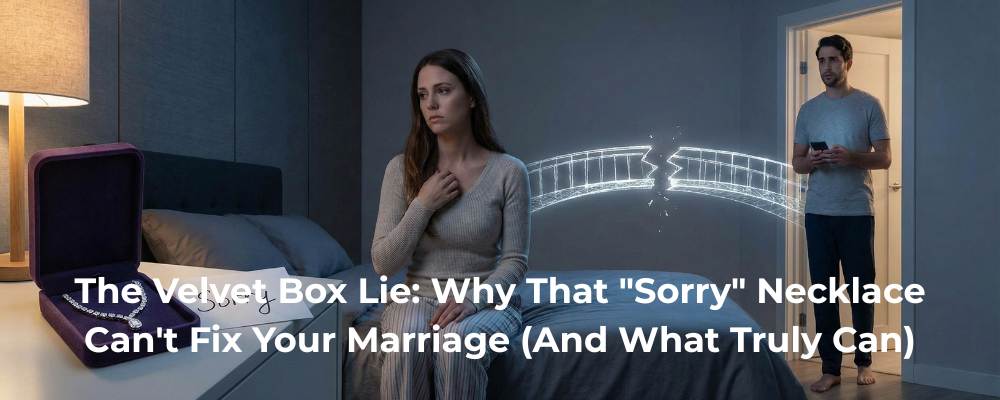
The box is sitting on the kitchen counter. It’s perfect. Maybe it’s a watch he’s been eyeing, or that necklace you saw in a magazine. It’s a peace offering after yesterday’s gut-wrenching fight, a silent apology wrapped in a bow. And for a moment, it works. The tension eases. But later that night, as you lay in bed, the silence between you feels just as loud, just as vast. The gift is beautiful, but the emptiness is still there. Sound familiar? If you’re nodding along, I see you. I really do. This is a story I hear all the time.
You’re left wondering how something so thoughtful can feel so hollow. It's a confusing and lonely place to be, and you start to question if you're ungrateful. But deep down, you know this isn't about the gift. It’s about the fact that it feels like a replacement for a real conversation, a shortcut around the hard work of reconnecting. This is especially painful when it feels like your husband buys gifts instead of affection, leaving you with things instead of the one thing you actually crave: him.
Let's be honest, it's an easy trap to fall into for both people. For the giver, buying a gift is a tangible, clear-cut action. It feels like doing something productive to solve the problem, and it bypasses the messy, vulnerable work of talking about feelings. It’s the path of least resistance. For the receiver, it can temporarily soothe the hurt. But this cycle is exactly how you end up asking yourself what to do when gifts feel like a band-aid over a wound that clearly needs stitches. It covers up the issue without ever starting the healing process.
This pattern is a symptom of a much deeper disconnect. Relying on presents to patch things up can easily slide into a dynamic where love starts to feel conditional, not collaborative. You’re not building a life together; you’re just managing a series of debts and payments. And you deserve so much more than that. The real work, the game-changing work, is in building emotional intimacy in a struggling marriage, not just papering over the cracks with shiny objects.
So, what’s the answer? It’s not about banning gifts forever. A thoughtful present given from a place of genuine love is a beautiful thing! The shift we’re talking about is moving away from using gifts as a crisis management tool. It's about learning what to do when gifts feel like a band-aid—which is to gently peel it back and address what's really going on underneath. It’s about courageously choosing presence over presents.
This article is your guide to doing just that. We're going to get real about why this happens and then dive into the pillars of a resilient partnership. This isn't just theory; it's about the practical, everyday work of building emotional intimacy in a struggling marriage. For women who feel their husband buys gifts instead of affection, we'll explore how to open that conversation. We'll give you a blueprint for a connection that’s so strong, no material object could ever replace it.
It’s almost impossible not to fall for it, isn’t it? The allure of the grand gesture is powerful, a siren song promising a quick and painless fix to our deepest relationship pains. We’re practically conditioned from birth to believe that a beautiful object can mend a broken connection. It’s a comforting thought, but it’s a fantasy that keeps so many couples stuck in a cycle of hurt and temporary relief, never actually solving a thing.
Think about every romantic comedy you’ve ever seen. The third act is almost always the same. He messes up—badly. He lies, he’s selfish, he forgets something monumental. After she rightfully walks away, he doesn't show up at her door ready for a long, difficult conversation about his emotional shortcomings. No. He shows up with a ridiculously expensive necklace, a trip to Paris, or a flash mob. The gift acts as a magical eraser, and suddenly, all is forgiven. We soak this stuff up, and it seeps into our subconscious. We start to believe that this is what true remorse and epic love look like.
There’s also a deep-seated psychological reason why a tangible gift feels so appealing as an apology. Words can feel flimsy. A promise to change is invisible. But a beautifully wrapped box? You can see it, touch it, wear it. It feels like concrete evidence of effort. It says, “I went somewhere, I spent money, I thought about this, and here is the proof.” For the person giving it, it offers a way to bypass the excruciating vulnerability of saying, “I was wrong, and I hurt you. Let’s talk about it.” It’s a shortcut around the messiness of emotions.
Let’s just call it what it is: buying a gift is often easier than doing the real work. Facing your partner’s pain, a pain you caused, is one of the hardest things you can do. It requires humility, patience, and a willingness to sit in discomfort without trying to immediately fix it. Buying a car or a diamond bracelet is a transaction. It has a clear start and a clear end. You hand it over, and you hope the transaction is complete, that the slate is now clean. It’s a classic form of conflict avoidance, a way to sidestep accountability.
Now, I can already hear some of you thinking, “But my husband’s love language is gift-giving!” And you’re not wrong. For some people, giving gifts is a genuine, heartfelt expression of love. But here’s where it gets tricky. If that’s the only language he speaks after a conflict, especially when your primary need is Quality Time or Words of Affirmation, the gift lands like a foreign tongue. It feels like he’s shouting “I LOVE YOU” in a language you don’t understand, when all you want is for him to whisper it in yours. This is when the pattern of a husband buys gifts instead of affection becomes a source of profound loneliness.
That temporary relief you feel when you accept the gift? It comes with a steep price tag, one that has nothing to do with the number on the receipt. Relying on materialism to solve emotional problems doesn’t just fail to work; it actively causes new damage. It introduces a toxic dynamic into the relationship that can be incredibly difficult to unwind, leaving both of you feeling more resentful and disconnected than before the gift ever appeared.
Using a gift to smooth over a serious fight is the emotional equivalent of putting a cartoon band-aid on a gaping wound. It might stop the bleeding for a second and hide the ugliness, but underneath, the damage is still there, festering. The core issues—the disrespect, the neglect, the broken trust—haven’t been cleaned out or stitched up. So, of course, the wound is going to get infected and reopen, and it’s always worse the next time. You have to learn what to do when gifts feel like a band-aid: acknowledge that the gesture, however well-intentioned, is not a substitute for true healing.
When this becomes your go-to pattern, your marriage slowly morphs from a partnership into a transaction. It creates a dangerous unspoken agreement: “You hurt me, so you owe me.” This can lead to an escalating arms race of apologies, where the gifts have to get bigger and more expensive to have the same calming effect. The giver starts to feel like an ATM, their efforts unappreciated. The receiver starts to feel bought, their forgiveness conditional on the quality of the offering. Resentment starts to build on both sides of the fence, poisoning the well of goodwill that every relationship needs to survive.
An expensive watch can’t make up for a thousand lonely nights. A designer handbag can’t replace the feeling of being truly seen and heard by your person. So often, what a partner is desperate for is not a thing, but a feeling: the feeling of being prioritized, understood, and cherished. The act of shopping for and giving a gift allows the giver to bypass the essential, non-negotiable work of providing their full, empathetic presence. It widens the very emotional chasm it’s meant to bridge, leaving one partner with a beautiful object and an aching heart.
Let’s not forget the very real, very stressful practical side of this. Consistently using expensive gifts as a marital patch can wreck your finances. According to a 2021 study by Ramsey Solutions, money fights are the second-leading cause of divorce. When you add the strain of credit card debt or secret spending to an already fractured relationship, you’re pouring gasoline on a fire. It introduces a whole new layer of conflict, betrayal, and anxiety into a home that is already struggling to find peace.
Alright, so we’ve established what doesn’t work. Now for the good stuff. The real stuff. Building a marriage that can withstand storms isn’t about grand, sweeping gestures. It’s about the small, consistent, intentional work you put in every single day. It’s about building a foundation so solid that it doesn’t crumble after every fight. These are the pillars that hold a real partnership up, and not a single one can be bought in a store.
Consistent, vulnerable communication is the absolute bedrock. This isn’t about winning an argument; it’s about understanding a perspective. Ditch the blame-filled “You always…” and embrace the vulnerable “I feel…” statements. When your partner is talking, your only job is to listen. Not to plan your rebuttal, but to truly hear what’s underneath their words. Create a space so safe that honesty can live there without fear of punishment.
I want you to think of your marriage as having an emotional bank account. Quality time is how you make deposits. This is not about sitting in the same room scrolling on your phones. It’s about focused, distraction-free time that says, “You are my priority.” It can be a weekly date night, a 15-minute coffee on the porch before the kids wake up, or a walk after dinner. These shared positive experiences build up a reserve of goodwill that you can draw from when things inevitably get tough.
Empathy is your marital superpower. It’s the ability to step outside of your own feelings and genuinely try to understand your partner’s world. It’s not sympathy (“Oh, you poor thing”), but true empathy (“I understand why you feel that way. Tell me more.”). This is the key to building emotional intimacy in a struggling marriage. When your partner feels truly seen, heard, and validated by you—even when you disagree—it builds a foundation of trust and security that no physical gift could ever hope to replicate.
You can’t build a life together if you have two different sets of blueprints. A resilient marriage requires you to function as a team, and that means getting aligned on your core values and your vision for the future. You have to talk about the big things: money, kids, career, where you want to be in five years. When you are working toward shared goals, it creates a powerful sense of unity. You stop being two individuals fighting for your own way and start being a team tackling the world together.
World-renowned relationship researcher Dr. John Gottman can predict divorce with over 90% accuracy, and he says the number one predictor is contempt. That’s sarcasm, eye-rolling, mockery, and a general feeling of superiority. The antidote is a culture of respect and appreciation. Value your partner’s opinions. Express gratitude for the little things they do. A simple “thank you for making coffee” goes further than you think. This daily practice is fundamental to building emotional intimacy in a struggling marriage. It requires a total mindset shift, one that teaches you what to do when gifts feel like a band-aid: you choose to offer appreciation instead. When you focus on these small, consistent acts, the problem of a husband buys gifts instead of affection often begins to solve itself, because the affection is finally being delivered in a way that can truly be received.
An expensive gift may provide a temporary truce in a struggling marriage, but it fundamentally fails to address deep-seated emotional issues. The practice of using material objects to solve conflict is often a form of avoidance, a shortcut that bypasses the difficult yet necessary work of vulnerable communication and accountability. This approach, often glamorized by popular culture, can create a toxic, transactional dynamic where affection feels conditional and resentment builds. The consistent use of costly presents can also introduce significant financial strain, adding another layer of conflict to the relationship.
True marital resilience is not purchased; it is built through intentional, non-material efforts. The foundation of a strong partnership rests on pillars like creating a safe space for honest communication, investing in focused quality time, and cultivating empathy to understand a partner's perspective. Aligning on shared values and actively showing respect and appreciation are also critical. These consistent practices foster genuine emotional intimacy, which is the true solution to healing a disconnected relationship.
Absolutely not; the critical factor is the motivation behind the gift. Presents offered as spontaneous expressions of affection, to celebrate a milestone, or simply because you saw something that reminded you of your partner are healthy and positive. These acts reinforce an already strong connection. The problem arises when an expensive gift is used as a tool for crisis management or as a substitute for a sincere apology and genuine emotional labor. When a present functions as a "peace offering" to prematurely end a conflict and sidestep a difficult conversation, it becomes a superficial fix. The key is to distinguish between a gift that enhances an existing bond and one that attempts to patch a fundamental crack in the relationship's foundation.
Honoring a partner's love language is essential for making them feel seen and valued. If their primary language is receiving gifts, it should not be ignored. The issue is not the act of giving itself, but its application as a conflict resolution tool. For a person who values gifts, the most meaningful presents are often those that demonstrate you listen and pay attention, not necessarily the most expensive ones. A relationship cannot be sustained on gifts alone, even for someone who treasures them. That expression must be integrated with the other vital pillars of a healthy marriage, such as quality time, words of affirmation, and consistent communication, to create a truly secure and intimate connection.
The most effective way to approach this conversation is to frame it positively, focusing on what you desire rather than what you dislike. Criticizing a gift, however well-intentioned your feedback may be, can put your partner on the defensive. Instead, choose a calm moment to express your feelings using "I" statements. You could say, "I feel incredibly loved and connected to you when we have uninterrupted time just for us. That dedicated attention means more to me than any physical object you could ever buy." By emphasizing your desire for connection and quality time, you are expressing a need and inviting them into a shared experience, which is far more constructive than rejecting their form of apology.
Breaking a deeply ingrained pattern requires starting with a small, manageable change. The first step is to have a conversation, outside of a conflict, and mutually agree that the current cycle is not working for either of you. Propose a temporary moratorium on "apology gifts." Instead, agree that after a disagreement, the first step toward reconciliation must be a non-material gesture. This could be scheduling a walk to talk things through, writing a heartfelt letter of apology, or performing a specific act of service for the other person. This deliberate shift disrupts the transactional script and forces both partners to engage in the real work of repair. If the cycle proves too difficult to break on your own, seeking guidance from a marriage therapist is a proactive and courageous step.
Popular culture, especially romantic films, uses the grand gesture as a narrative shortcut. In a two-hour movie, there isn't time to depict the slow, difficult, and often unglamorous process of rebuilding trust and communicating through a major conflict. A dramatic, expensive gift provides a visually compelling and emotionally satisfying climax that quickly resolves the plot. In reality, this gesture skips the most crucial part: the actual work of reconciliation. The emptiness you feel comes from the knowledge that the underlying issue—the reason for the fight—has been completely ignored. Real connection is built in the quiet moments of understanding and accountability, not in a single, cinematic display that fails to address the root problem.
Yes, this strategy frequently causes significant collateral damage. Firstly, it establishes a transactional dynamic, shifting the relationship from a partnership to a system of debts and payments. This can lead to an escalating need for bigger and better gifts to achieve the same pacifying effect. Secondly, it breeds resentment in both individuals; one partner may feel their forgiveness is being bought, while the other may feel their efforts are unappreciated or taken for granted. Finally, as noted in a 2021 Ramsey Solutions study where money fights were identified as the second-leading cause of divorce, this habit can introduce severe financial strain. The stress of debt or secret spending adds a highly combustible new layer of conflict to an already fragile situation.
The box is sitting on the kitchen counter. It’s perfect. Maybe it’s a watch he’s been eyeing, or that necklace you saw in a magazine. It’s a peace offering after yesterday’s gut-wrenching fight, a silent apology wrapped in a bow. And for a moment, it works. The tension eases. But later that night, as you lay in bed, the silence between you feels just as loud, just as vast. The gift is beautiful, but the emptiness is still there. Sound familiar? If you’re nodding along, I see you. I really do. This is a story I hear all the time.
You’re left wondering how something so thoughtful can feel so hollow. It's a confusing and lonely place to be, and you start to question if you're ungrateful. But deep down, you know this isn't about the gift. It’s about the fact that it feels like a replacement for a real conversation, a shortcut around the hard work of reconnecting. This is especially painful when it feels like your husband buys gifts instead of affection, leaving you with things instead of the one thing you actually crave: him.
Let's be honest, it's an easy trap to fall into for both people. For the giver, buying a gift is a tangible, clear-cut action. It feels like doing something productive to solve the problem, and it bypasses the messy, vulnerable work of talking about feelings. It’s the path of least resistance. For the receiver, it can temporarily soothe the hurt. But this cycle is exactly how you end up asking yourself what to do when gifts feel like a band-aid over a wound that clearly needs stitches. It covers up the issue without ever starting the healing process.
This pattern is a symptom of a much deeper disconnect. Relying on presents to patch things up can easily slide into a dynamic where love starts to feel conditional, not collaborative. You’re not building a life together; you’re just managing a series of debts and payments. And you deserve so much more than that. The real work, the game-changing work, is in building emotional intimacy in a struggling marriage, not just papering over the cracks with shiny objects.
So, what’s the answer? It’s not about banning gifts forever. A thoughtful present given from a place of genuine love is a beautiful thing! The shift we’re talking about is moving away from using gifts as a crisis management tool. It's about learning what to do when gifts feel like a band-aid—which is to gently peel it back and address what's really going on underneath. It’s about courageously choosing presence over presents.
This article is your guide to doing just that. We're going to get real about why this happens and then dive into the pillars of a resilient partnership. This isn't just theory; it's about the practical, everyday work of building emotional intimacy in a struggling marriage. For women who feel their husband buys gifts instead of affection, we'll explore how to open that conversation. We'll give you a blueprint for a connection that’s so strong, no material object could ever replace it.
It’s almost impossible not to fall for it, isn’t it? The allure of the grand gesture is powerful, a siren song promising a quick and painless fix to our deepest relationship pains. We’re practically conditioned from birth to believe that a beautiful object can mend a broken connection. It’s a comforting thought, but it’s a fantasy that keeps so many couples stuck in a cycle of hurt and temporary relief, never actually solving a thing.
Think about every romantic comedy you’ve ever seen. The third act is almost always the same. He messes up—badly. He lies, he’s selfish, he forgets something monumental. After she rightfully walks away, he doesn't show up at her door ready for a long, difficult conversation about his emotional shortcomings. No. He shows up with a ridiculously expensive necklace, a trip to Paris, or a flash mob. The gift acts as a magical eraser, and suddenly, all is forgiven. We soak this stuff up, and it seeps into our subconscious. We start to believe that this is what true remorse and epic love look like.
There’s also a deep-seated psychological reason why a tangible gift feels so appealing as an apology. Words can feel flimsy. A promise to change is invisible. But a beautifully wrapped box? You can see it, touch it, wear it. It feels like concrete evidence of effort. It says, “I went somewhere, I spent money, I thought about this, and here is the proof.” For the person giving it, it offers a way to bypass the excruciating vulnerability of saying, “I was wrong, and I hurt you. Let’s talk about it.” It’s a shortcut around the messiness of emotions.
Let’s just call it what it is: buying a gift is often easier than doing the real work. Facing your partner’s pain, a pain you caused, is one of the hardest things you can do. It requires humility, patience, and a willingness to sit in discomfort without trying to immediately fix it. Buying a car or a diamond bracelet is a transaction. It has a clear start and a clear end. You hand it over, and you hope the transaction is complete, that the slate is now clean. It’s a classic form of conflict avoidance, a way to sidestep accountability.
Now, I can already hear some of you thinking, “But my husband’s love language is gift-giving!” And you’re not wrong. For some people, giving gifts is a genuine, heartfelt expression of love. But here’s where it gets tricky. If that’s the only language he speaks after a conflict, especially when your primary need is Quality Time or Words of Affirmation, the gift lands like a foreign tongue. It feels like he’s shouting “I LOVE YOU” in a language you don’t understand, when all you want is for him to whisper it in yours. This is when the pattern of a husband buys gifts instead of affection becomes a source of profound loneliness.
That temporary relief you feel when you accept the gift? It comes with a steep price tag, one that has nothing to do with the number on the receipt. Relying on materialism to solve emotional problems doesn’t just fail to work; it actively causes new damage. It introduces a toxic dynamic into the relationship that can be incredibly difficult to unwind, leaving both of you feeling more resentful and disconnected than before the gift ever appeared.
Using a gift to smooth over a serious fight is the emotional equivalent of putting a cartoon band-aid on a gaping wound. It might stop the bleeding for a second and hide the ugliness, but underneath, the damage is still there, festering. The core issues—the disrespect, the neglect, the broken trust—haven’t been cleaned out or stitched up. So, of course, the wound is going to get infected and reopen, and it’s always worse the next time. You have to learn what to do when gifts feel like a band-aid: acknowledge that the gesture, however well-intentioned, is not a substitute for true healing.
When this becomes your go-to pattern, your marriage slowly morphs from a partnership into a transaction. It creates a dangerous unspoken agreement: “You hurt me, so you owe me.” This can lead to an escalating arms race of apologies, where the gifts have to get bigger and more expensive to have the same calming effect. The giver starts to feel like an ATM, their efforts unappreciated. The receiver starts to feel bought, their forgiveness conditional on the quality of the offering. Resentment starts to build on both sides of the fence, poisoning the well of goodwill that every relationship needs to survive.
An expensive watch can’t make up for a thousand lonely nights. A designer handbag can’t replace the feeling of being truly seen and heard by your person. So often, what a partner is desperate for is not a thing, but a feeling: the feeling of being prioritized, understood, and cherished. The act of shopping for and giving a gift allows the giver to bypass the essential, non-negotiable work of providing their full, empathetic presence. It widens the very emotional chasm it’s meant to bridge, leaving one partner with a beautiful object and an aching heart.
Let’s not forget the very real, very stressful practical side of this. Consistently using expensive gifts as a marital patch can wreck your finances. According to a 2021 study by Ramsey Solutions, money fights are the second-leading cause of divorce. When you add the strain of credit card debt or secret spending to an already fractured relationship, you’re pouring gasoline on a fire. It introduces a whole new layer of conflict, betrayal, and anxiety into a home that is already struggling to find peace.
Alright, so we’ve established what doesn’t work. Now for the good stuff. The real stuff. Building a marriage that can withstand storms isn’t about grand, sweeping gestures. It’s about the small, consistent, intentional work you put in every single day. It’s about building a foundation so solid that it doesn’t crumble after every fight. These are the pillars that hold a real partnership up, and not a single one can be bought in a store.
Consistent, vulnerable communication is the absolute bedrock. This isn’t about winning an argument; it’s about understanding a perspective. Ditch the blame-filled “You always…” and embrace the vulnerable “I feel…” statements. When your partner is talking, your only job is to listen. Not to plan your rebuttal, but to truly hear what’s underneath their words. Create a space so safe that honesty can live there without fear of punishment.
I want you to think of your marriage as having an emotional bank account. Quality time is how you make deposits. This is not about sitting in the same room scrolling on your phones. It’s about focused, distraction-free time that says, “You are my priority.” It can be a weekly date night, a 15-minute coffee on the porch before the kids wake up, or a walk after dinner. These shared positive experiences build up a reserve of goodwill that you can draw from when things inevitably get tough.
Empathy is your marital superpower. It’s the ability to step outside of your own feelings and genuinely try to understand your partner’s world. It’s not sympathy (“Oh, you poor thing”), but true empathy (“I understand why you feel that way. Tell me more.”). This is the key to building emotional intimacy in a struggling marriage. When your partner feels truly seen, heard, and validated by you—even when you disagree—it builds a foundation of trust and security that no physical gift could ever hope to replicate.
You can’t build a life together if you have two different sets of blueprints. A resilient marriage requires you to function as a team, and that means getting aligned on your core values and your vision for the future. You have to talk about the big things: money, kids, career, where you want to be in five years. When you are working toward shared goals, it creates a powerful sense of unity. You stop being two individuals fighting for your own way and start being a team tackling the world together.
World-renowned relationship researcher Dr. John Gottman can predict divorce with over 90% accuracy, and he says the number one predictor is contempt. That’s sarcasm, eye-rolling, mockery, and a general feeling of superiority. The antidote is a culture of respect and appreciation. Value your partner’s opinions. Express gratitude for the little things they do. A simple “thank you for making coffee” goes further than you think. This daily practice is fundamental to building emotional intimacy in a struggling marriage. It requires a total mindset shift, one that teaches you what to do when gifts feel like a band-aid: you choose to offer appreciation instead. When you focus on these small, consistent acts, the problem of a husband buys gifts instead of affection often begins to solve itself, because the affection is finally being delivered in a way that can truly be received.
An expensive gift may provide a temporary truce in a struggling marriage, but it fundamentally fails to address deep-seated emotional issues. The practice of using material objects to solve conflict is often a form of avoidance, a shortcut that bypasses the difficult yet necessary work of vulnerable communication and accountability. This approach, often glamorized by popular culture, can create a toxic, transactional dynamic where affection feels conditional and resentment builds. The consistent use of costly presents can also introduce significant financial strain, adding another layer of conflict to the relationship.
True marital resilience is not purchased; it is built through intentional, non-material efforts. The foundation of a strong partnership rests on pillars like creating a safe space for honest communication, investing in focused quality time, and cultivating empathy to understand a partner's perspective. Aligning on shared values and actively showing respect and appreciation are also critical. These consistent practices foster genuine emotional intimacy, which is the true solution to healing a disconnected relationship.
Absolutely not; the critical factor is the motivation behind the gift. Presents offered as spontaneous expressions of affection, to celebrate a milestone, or simply because you saw something that reminded you of your partner are healthy and positive. These acts reinforce an already strong connection. The problem arises when an expensive gift is used as a tool for crisis management or as a substitute for a sincere apology and genuine emotional labor. When a present functions as a "peace offering" to prematurely end a conflict and sidestep a difficult conversation, it becomes a superficial fix. The key is to distinguish between a gift that enhances an existing bond and one that attempts to patch a fundamental crack in the relationship's foundation.
Honoring a partner's love language is essential for making them feel seen and valued. If their primary language is receiving gifts, it should not be ignored. The issue is not the act of giving itself, but its application as a conflict resolution tool. For a person who values gifts, the most meaningful presents are often those that demonstrate you listen and pay attention, not necessarily the most expensive ones. A relationship cannot be sustained on gifts alone, even for someone who treasures them. That expression must be integrated with the other vital pillars of a healthy marriage, such as quality time, words of affirmation, and consistent communication, to create a truly secure and intimate connection.
The most effective way to approach this conversation is to frame it positively, focusing on what you desire rather than what you dislike. Criticizing a gift, however well-intentioned your feedback may be, can put your partner on the defensive. Instead, choose a calm moment to express your feelings using "I" statements. You could say, "I feel incredibly loved and connected to you when we have uninterrupted time just for us. That dedicated attention means more to me than any physical object you could ever buy." By emphasizing your desire for connection and quality time, you are expressing a need and inviting them into a shared experience, which is far more constructive than rejecting their form of apology.
Breaking a deeply ingrained pattern requires starting with a small, manageable change. The first step is to have a conversation, outside of a conflict, and mutually agree that the current cycle is not working for either of you. Propose a temporary moratorium on "apology gifts." Instead, agree that after a disagreement, the first step toward reconciliation must be a non-material gesture. This could be scheduling a walk to talk things through, writing a heartfelt letter of apology, or performing a specific act of service for the other person. This deliberate shift disrupts the transactional script and forces both partners to engage in the real work of repair. If the cycle proves too difficult to break on your own, seeking guidance from a marriage therapist is a proactive and courageous step.
Popular culture, especially romantic films, uses the grand gesture as a narrative shortcut. In a two-hour movie, there isn't time to depict the slow, difficult, and often unglamorous process of rebuilding trust and communicating through a major conflict. A dramatic, expensive gift provides a visually compelling and emotionally satisfying climax that quickly resolves the plot. In reality, this gesture skips the most crucial part: the actual work of reconciliation. The emptiness you feel comes from the knowledge that the underlying issue—the reason for the fight—has been completely ignored. Real connection is built in the quiet moments of understanding and accountability, not in a single, cinematic display that fails to address the root problem.
Yes, this strategy frequently causes significant collateral damage. Firstly, it establishes a transactional dynamic, shifting the relationship from a partnership to a system of debts and payments. This can lead to an escalating need for bigger and better gifts to achieve the same pacifying effect. Secondly, it breeds resentment in both individuals; one partner may feel their forgiveness is being bought, while the other may feel their efforts are unappreciated or taken for granted. Finally, as noted in a 2021 Ramsey Solutions study where money fights were identified as the second-leading cause of divorce, this habit can introduce severe financial strain. The stress of debt or secret spending adds a highly combustible new layer of conflict to an already fragile situation.
Enter your email to unlock your exclusive discount code instantly.
Paste this code at checkout to get 50% OFF: