March 2, 2026

Apology Text to My Wife After I Yelled – 3 Real Versions That Help Apology Text to My Wife After I Yelled: 3 Versions That Actually […]



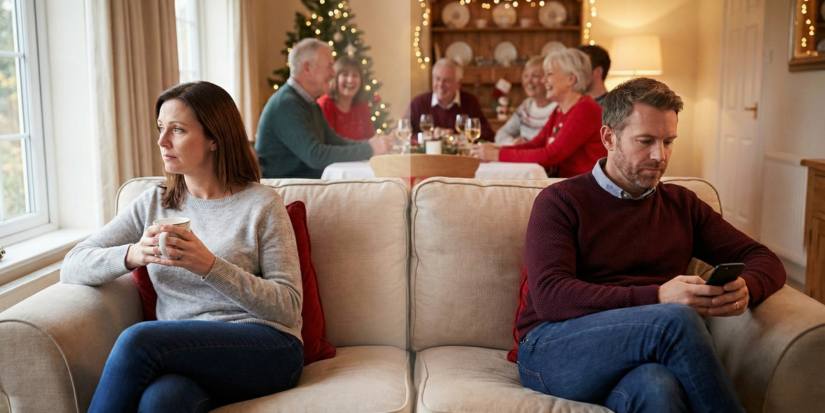
The scene is almost a cliché, isn't it? Your sister-in-law's house smells like pine needles and cinnamon. Carols are playing softly, someone just told a lame joke, and a wave of laughter ripples through the room. You’re holding a glass of wine, a perfect smile fixed on your face. And next to you, close enough to touch, is your partner. But they might as well be on the moon. You feel an invisible wall between you, thick and soundproof. It’s a painful, hollow ache right in the middle of all this forced cheer.
I want you to know, right here and now, that your feeling is real and it’s devastatingly common. This profound sense of loneliness, the kind that hits hardest when you’re surrounded by people, is a secret burden for so many. The pressure to be merry and bright creates a terrible contrast with the cold reality you’re living in. An emotional disconnect from husband during Christmas can feel like a personal failing, but I promise you, it's not. It’s often a symptom of deeper cracks the holidays just happen to illuminate with blinding floodlights.
Over time, a quiet drift can happen in any relationship, turning partners into something more like courteous housemates. You might handle bills, kids' schedules, and holiday logistics like a well-oiled machine, but the emotional core has gone missing. This is especially true when your spouse feels like a roommate during holidays, a time when you desperately crave a partner to lean on. You're a team in name only, managing tasks instead of sharing a life. It's an exhausting performance that leaves you feeling more depleted than ever.
And so you play your part. You laugh at the right times, pass the gravy, and talk about your year's highlights, all while a storm of questions rages inside. "Are we going to be okay?" This article isn't about blaming or shaming. It's about pulling back the curtain on why this specific season can make feeling alone in marriage at Christmas so incredibly acute. We are going to talk about how to reconnect with spouse during holidays, not with grand, impossible gestures, but with small, quiet steps that can light a candle in the dark.
My goal here is to help you understand the "why" behind this ache, from the emotional disconnect from husband during Christmas to that gut-punch feeling when your spouse feels like a roommate during holidays. We'll walk through why the holiday pressure cooker makes everything worse, and more importantly, what you can actually do about it. Because recognizing the problem isn't the end of the story; it's the very first step toward finding your way back to each other.
Let's get right to the heart of it. Christmas doesn't create the disconnect you're feeling; it simply puts a giant, glittering magnifying glass on the cracks that were already there. It takes the quiet hum of dissatisfaction you live with day-to-day and cranks it up to a screaming siren. The whole season is designed to be a pressure cooker for emotions, and if your relationship is already fragile, it’s bound to show.
First, you're up against a cultural fantasy machine. Every commercial, every movie, every impossibly perfect Instagram post is selling you an image of yuletide bliss. You see couples ice skating hand-in-hand, laughing as they decorate a tree, exchanging meaningful glances over a crackling fire. This relentless parade of manufactured joy creates a painful gap between the holiday you’re supposed to be having and the silent, lonely one you’re actually experiencing. That contrast is brutal. It makes you feel like you’re failing at the one time of year you're meant to be winning at togetherness.
Then come the mandatory performances. You have the office party, the neighborhood open house, your parents' formal dinner. At each event, you and your partner are expected to present as a united, happy front. This act is exhausting. Putting on that smile, making small talk, and pretending everything is fine when you haven't had a real conversation in weeks takes a tremendous toll. The performance makes the private silence that follows even more deafening. You get home, the masks come off, and the void feels bigger than ever.
It’s like being on stage for weeks on end. You're playing the role of the "happy couple" for an audience of family and friends. But the moment you're out of the spotlight, the reality of your isolation crashes back in. This constant switch between public performance and private pain is emotionally draining and just makes you feel more alone.
Christmas is a ghost of a holiday; it’s built on memories. You remember the excitement of your first Christmas together, the hope and intimacy you shared. But now, that nostalgia serves only to highlight what's been lost. The memory of "us" then makes the reality of "us" now feel so much sharper, so much more disappointing. You're not just mourning the present; you're grieving a past that feels a million miles away, even when the person who shared it is sitting right across the room from you.
The season also forces you to confront the logistics of life. A 2021 survey by the American Psychological Association found that 38% of people said their stress level increases during the holidays. When you're both running on empty from buying gifts, planning meals, and managing travel, there’s simply no emotional energy left for connection. You become two stressed-out project managers executing a holiday plan, not partners sharing an experience. Communication becomes a series of terse questions about tasks, and the silence in between is filled with unspoken stress, not warmth.
The holiday pressure is intense, but it’s not the root cause. The real problem is the year-round erosion that has made your relationship vulnerable in the first place. These are the foundational issues that turn a season of togetherness into a spotlight on your separation. Think of your marriage as a ship; if it has small, unaddressed leaks, a storm like Christmas is going to feel like a hurricane.
At its core, marital loneliness is a crisis of emotional intimacy. This isn't just about sex; it's about the profound feeling of being truly seen, heard, and understood by your person. It’s the safety of being vulnerable without fear of judgment. Over years, this can fade so slowly you barely notice. The nightly check-ins about your day are replaced by scrolling on your phones. Sharing fears and dreams gives way to silence. You stop being each other’s primary source of comfort, turning instead to friends, family, or even just yourself.
Many couples slide from being partners in life to being partners in logistics. Your conversations become entirely functional, a sterile exchange of information about who’s picking up the kids, what’s for dinner, or when the plumber is coming. You coordinate schedules beautifully but have lost the art of connecting souls. The friendship that underpins every strong marriage withers, and without that foundation, the whole structure feels shaky. This is how a spouse feels like a roommate during holidays; you're just two people managing a household, not sharing a heart.
Inside every lonely spouse is a well of unmet needs. Maybe you crave affection and get none. Perhaps you long for words of appreciation but only hear criticism or silence. These ignored needs don't just disappear; they curdle into resentment. Resentment is the most corrosive acid in a marriage. It builds an invisible wall, brick by silent brick, until you can no longer reach each other. You may be sleeping in the same bed, but you're emotionally miles apart, trapped in your own hurt.
You can be surrounded by the warmth of family, but an emotional disconnect from husband during Christmas can make you feel like you're freezing. You watch him laugh with his relatives and wonder, "Why can't he share that part of himself with me anymore?" It's a unique and piercing kind of pain that's hard to explain to anyone who hasn't felt it.
Sometimes the loneliness is so constant that it starts to feel normal. You might even question if you’re being too sensitive or demanding. Let me be clear: you are not. Your feelings are a vital signal that something is wrong. Acknowledging the signs is the first step toward finding a solution.
Take a hard, honest look. Do you consistently turn to your best friend for emotional support instead of your spouse? Have you stopped sharing the little inside jokes that used to define your bond? Do conversations always stay on the surface level, avoiding anything deep or vulnerable? Do you feel a sense of dread, not excitement, at the thought of a quiet evening alone together? If you’re nodding your head, you’re not imagining things. That constant, nagging feeling that your spouse feels like a roommate during holidays is a giant red flag.
This isn't just in your head; it's in your body. Chronic loneliness has a real, measurable impact on your health. Studies, including a major 2018 national survey by Cigna, have linked loneliness to an increased risk of depression, anxiety, and even a higher mortality rate, comparable to smoking 15 cigarettes a day. It floods your system with the stress hormone cortisol, weakening your immune system and chipping away at your self-esteem. Your heart doesn't just ache figuratively; the strain is real.
Sustained loneliness destroys the very foundation of a marriage. It erodes trust and fosters what relationship expert Dr. John Gottman calls the "Four Horsemen": criticism, contempt, defensiveness, and stonewalling. Once these patterns set in, the path back to each other becomes incredibly steep. The marriage isn't just lacking warmth; it's actively becoming a source of pain, making a complete emotional checkout almost inevitable.
Okay, you've sat with the pain and identified the problem. Now what? It can feel hopeless, especially in the middle of the holiday chaos. But I want to assure you, this is not an impossible situation. Reconnection doesn't start with a grand, dramatic gesture. It starts with a single, courageous step. Let’s talk about a real plan for how to reconnect with spouse during holidays.
The first conversation has to be with yourself. Admit it, without judgment: "I am lonely." Once you’ve honored your own feelings, you can think about broaching it with your partner. Wait for a calm, neutral moment—not after a stressful family dinner. Use a soft startup. Say something like, "I've been feeling a bit distant from you lately, and I miss us. I know the holidays are crazy, but I want to find our way back." An "I" statement feels much less like an attack.
You can’t fix years of distance in one December week. So, don't try. Instead, focus on creating "micro-moments" of connection. Make a pact to put your phones away for 15 minutes after the kids are in bed. Let a hug last three seconds longer than usual. Make them a cup of coffee without being asked. Send a simple text during a hectic day: "Thinking of you." These small acts are deposits in a badly overdrawn emotional bank account.
This is the most practical advice on how to reconnect with spouse during holidays. It’s not about booking a spontaneous trip to Paris; it's about looking up from your phone when they walk into the room. It's about consciously choosing to turn toward them, even for a moment, instead of away.
Shift your mindset. Instead of seeing the holiday chaos as another thing driving you apart, frame it as a shared mission you can tackle together. Say it out loud: "Okay, this is going to be a wild week with my family. How can we, as a team, get through it?" This changes the dynamic from you versus them to us versus the problem. It fosters camaraderie and reminds you both that you can be allies, which is a powerful antidote to the isolation that comes with feeling alone in marriage at Christmas.
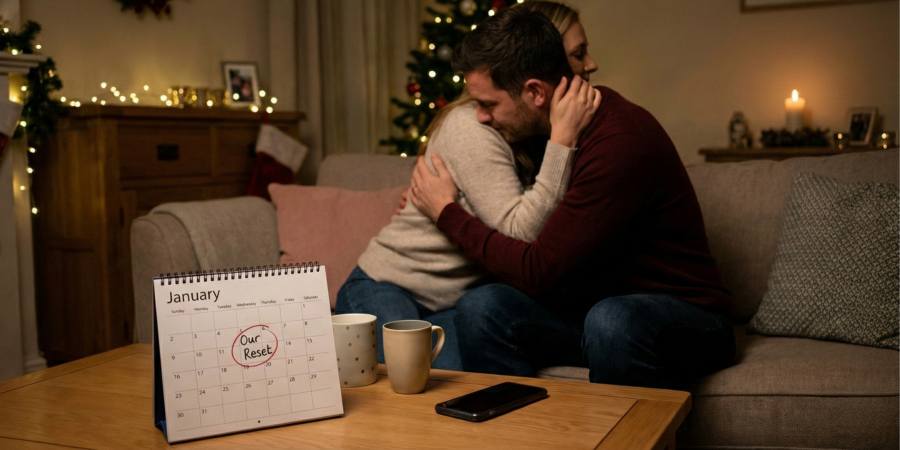
Finally, give yourselves some grace. The high-pressure holiday season is probably not the time for deep, soul-baring conversations about the state of your union. The most powerful step you might take in December is simply agreeing to address it in January. Put a date on the calendar. Say, "I want to talk more about us, but this isn't the right time. Let's set aside Saturday the 18th to really talk, just us." This provides immediate relief, shows a mutual commitment, and ends the year with a promise of hope.
The Christmas season, with its intense pressure for perfection and manufactured joy, often functions as a magnifying glass on the pre-existing cracks within a marriage, amplifying feelings of profound loneliness. This heightened sense of isolation stems not from the holiday itself but from year-round problems such as eroded emotional intimacy, communication that has devolved into mere logistics, and a build-up of unspoken resentment from unmet needs.
Chronic marital loneliness is not a minor issue; it carries significant health risks, with studies suggesting its impact is comparable to smoking, and it can systematically corrode the foundation of the relationship. To counteract this painful dynamic, couples can implement small, actionable steps. These include gently acknowledging the disconnect to one another, creating micro-moments of connection amidst the chaos, framing the holiday stress as a team mission, and planning for a dedicated relationship reset in the calm of the new year.
Timing and approach are everything. Avoid bringing up these sensitive feelings during a high-stress moment, like right after a tense family dinner. Instead, choose a calm, neutral time when you are both relatively relaxed and have a moment of privacy. The key is to use a soft startup that focuses on your own feelings rather than their actions. Using "I" statements is a crucial strategy. For instance, saying "I've been feeling a bit distant from you lately, and I miss us" is an invitation to connect, whereas "You never talk to me anymore" sounds like an accusation that will likely trigger defensiveness. The goal is to express your vulnerability and desire for reconnection, making it about the "us" that you miss, not about their personal failings.
It is entirely possible for one partner to feel a profound sense of loneliness while the other appears content. This discrepancy can happen for several reasons. Your partner might be genuinely less attuned to the emotional distance that has grown between you, especially if communication has become purely functional. They may also be engaging in the "Forced Festivity Effect," putting on a happy face for family and friends as a coping mechanism, only to feel the same void in private. Their outward happiness is not a true reflection of the relationship's health. This is precisely why initiating a gentle conversation is so important; your partner cannot address a problem they may not fully perceive. Sharing your feelings opens the door for them to see the relationship from your perspective.
Absolutely. Marital loneliness is fundamentally a crisis of emotional intimacy, not necessarily a lack of physical intimacy. The experience of loneliness is rooted in the feeling of being unseen, unheard, and misunderstood by your partner. Sex can become a routine or a purely physical act that is disconnected from genuine vulnerability, affection, and emotional bonding. In some cases, this kind of disconnected physical intimacy can worsen feelings of loneliness, making one feel more like an object than a cherished partner. True connection involves sharing fears, dreams, and daily experiences. When sex happens in an emotional vacuum, the sense of isolation can feel even more piercing afterward.
The key is to abandon the idea of a grand fix and focus instead on small, achievable actions. You can create "micro-moments" of connection, which are tiny deposits into your emotional bank account. This could be as simple as putting phones away for 15 minutes to talk without distractions, sharing a hug that lasts a few seconds longer, or sending a quick text during the day that says "thinking of you." Another powerful strategy is to shift your mindset and tackle the holiday chaos as a team. This reframes the stress as an external problem you are fighting together. Finally, give yourselves grace by planning a "post-holiday reset"—put a date on the calendar in January specifically to talk about your relationship, which provides hope and a concrete plan.
Recognizing when to seek outside help is a critical step. If your attempts to initiate gentle conversations consistently devolve into destructive patterns, it is a significant red flag. Relationship expert Dr. John Gottman identifies these as the "Four Horsemen": criticism, contempt, defensiveness, and stonewalling. If these behaviors dominate your interactions, it’s incredibly difficult to make progress on your own. Furthermore, if the wall of silent resentment feels too high to climb over, or if one or both partners have emotionally checked out, a professional counselor can provide a neutral, structured environment to help you communicate safely. Agreeing to seek therapy can itself be a powerful "post-holiday reset," signaling a serious commitment from both partners to healing the relationship.
This is a crucial distinction. Solitude, or "alone time," is a positive and healthy state that you choose in order to rest, reflect, and recharge. It is restorative. Loneliness, on the other hand, is an involuntary and painful state of feeling emotionally disconnected from the people you are with. It is a feeling of being invisible, even when you are physically next to your spouse. While solitude replenishes you, the chronic stress of loneliness is draining and has been linked to negative health outcomes, according to a 2018 Cigna study. The feeling of dreading one-on-one time or realizing conversations never go beyond the surface are signs of loneliness, not a need for solitude. It's about the quality of connection, not the quantity of time spent together.