December 17, 2025
Stop Renting Your Budget: Why Smart Spreadsheets Are The Real “Mint Killer” in 2025 By Sarah | Updated: December 2025 Let’s be honest: paying a monthly […]



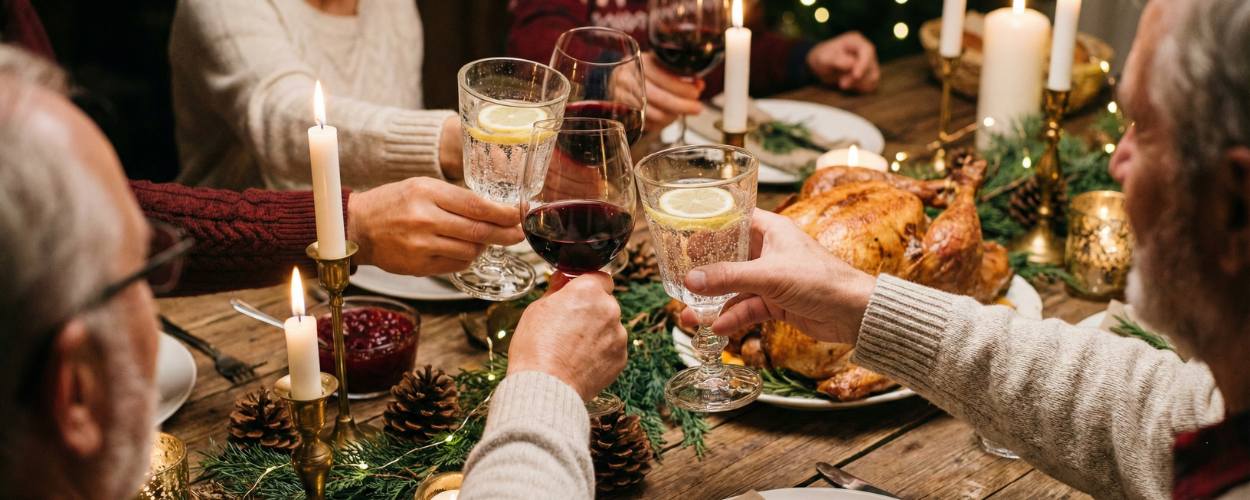
Let's be real—the holidays are a pressure cooker. This guide is your survival plan for managing alcohol at holiday gatherings to prevent fights, so you can protect your peace and actually enjoy the season.
Let's be real—the holidays are a pressure cooker. When you add alcohol to the mix of family history, high expectations, and exhaustion, it’s a recipe for disaster. This guide is your survival plan. It's packed with real-world strategies for managing alcohol at holiday gatherings to prevent fights, so you can protect your peace and actually enjoy the season. We’re going to cover everything from managing your own intake to hosting a party that doesn't revolve around the bar, giving you the tools to keep conversations merry and bright, not messy and bright red.
You know that picture-perfect holiday scene we all have in our heads? The one with the twinkling lights, cozy sweaters, and everyone laughing around a crackling fire? Yeah, me too. But if your reality often looks more like a tense family dinner one wrong comment away from exploding, you are definitely not alone. The pressure to be cheerful and connected can feel like a full-time job from November to January, and frankly, it’s exhausting.
Every family has its fault lines—those old disagreements and unspoken tensions simmering just below the surface. We spend most of the year carefully navigating them, but the holidays force everyone into the same room. It’s a delicate balance that can be completely shattered by one simple, seemingly innocent thing: the free-flowing booze.
Suddenly, that extra glass of wine turns what would have been a mild eye-roll into a full-blown confrontation. I've seen it happen more times than I can count. Alcohol lowers our inhibitions and cranks up the emotional volume, making it the perfect catalyst for conflict. If you’re desperately searching for how to avoid arguments with family during holidays, understanding this dynamic is the absolute first step. It’s not about demonizing a festive drink; it’s about recognizing its power in an already high-stakes environment.
Think about the sheer exhaustion for a moment. You’ve been shopping, cooking, cleaning, and trying to manage everyone’s expectations. Your patience is already worn thin. This is exactly why so many people dread the thought of dealing with drunk relatives at Thanksgiving or Christmas. They know that once the alcohol starts flowing, the filters come off, and long-buried resentments can come roaring back to life, turning a celebration into a casualty.
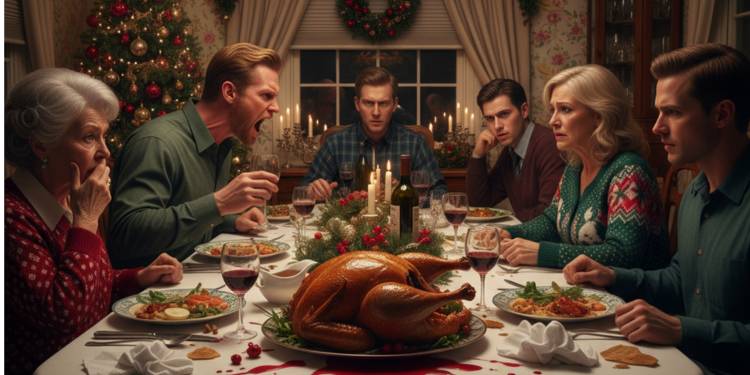
But here’s the good news: you don’t have to just cross your fingers and hope for the best. You can take back control. This article is your playbook, your game plan for managing alcohol at holiday gatherings to prevent fights before they even start. I’m not going to give you preachy, unrealistic advice. Instead, we'll cut to the chase with practical, easy-to-implement strategies you can use immediately, whether you’re a guest or the host.
We’re going to break down exactly how to avoid arguments with family during holidays by setting personal boundaries and creating a safer environment for everyone. From smart hosting tips that de-emphasize drinking to personal game plans for navigating tricky conversations, you’ll walk away feeling empowered. Forget just surviving the season; this is about learning the skills for dealing with drunk relatives at Thanksgiving and any other gathering, so you can actually create those warm memories you deserve.
Before we even talk about that first glass of eggnog, we have to be honest about the environment it’s being poured into. Alcohol isn’t a magic potion that creates arguments out of thin air. No, it’s an accelerant. It’s the match thrown onto a pile of tinder that’s been collecting all year, or even for decades. And the holiday season is a master at stacking that pile dangerously high.
You know what I’m talking about. Every family has its ghosts. That unresolved argument from ten years ago, your uncle’s political rants, the simmering resentment between siblings. We spend most of the year keeping a safe distance, but the holidays shove everyone back into their old, assigned roles. Suddenly you’re the “irresponsible younger brother” or the “uptight older sister” all over again. These dynamics are a minefield, and you’re walking through it with a target on your back.
Then there’s the pressure to create some kind of flawless, Norman Rockwell painting of a holiday. Thanks to social media, we’re all comparing our messy, real-life kitchens to someone else’s curated highlight reel. This chase for perfection is a recipe for anxiety. An American Psychological Association poll consistently finds that a lack of time and money pressures are top stressors during the holidays for over 60% of people. When the turkey is a little dry or the kids are fighting, that feeling of failure can make you incredibly brittle.
Let's get real about money. The financial strain is enormous. The National Retail Federation projected that the average consumer would spend nearly $1,000 on holiday items in 2024. That pressure creates a ton of stress. You might feel resentful about the cost of hosting, or guilty that you can't afford the gifts your kids are asking for. This kind of anxiety gnaws at you, shortening your fuse long before your cousin asks why you’re still single.
And for so many, this season is just plain hard. It’s a time filled with empty chairs and painful memories of loved ones who are no longer with us. It can amplify feelings of loneliness for those who are single or far from home. Add in Seasonal Affective Disorder (SAD), a type of depression related to changes in seasons, and you have a significant portion of the population just trying to get through the day. They aren't looking for a fight, but their emotional reserves are already depleted.
Finally, you’re just plain tired. The sheer physical exhaustion from weeks of shopping, decorating, cooking, and traveling is enough to drain anyone’s battery. When you’re running on fumes, your patience evaporates. Every little annoyance feels like a major crisis. This is the volatile, emotionally-charged battlefield we walk onto before a single cork is popped.
So, what exactly happens when alcohol enters this pressure cooker? It’s not just about feeling “buzzed.” There’s a very real, very predictable chemical process that takes over, and it systematically dismantles the very parts of your brain that help you keep the peace.
Think of your prefrontal cortex as the CEO of your brain. It’s in charge of rational thought, decision-making, and, crucially, social filters. Alcohol’s first stop is to send that CEO on an unscheduled vacation. It depresses this region, which is why people start saying things they’d normally keep to themselves. That “brutally honest” comment from your aunt? That’s her prefrontal cortex going offline, leaving her impulses in charge of the conversation.
Alcohol also messes with your neurotransmitters, the brain's chemical messengers. It can crank up the volume on whatever you’re already feeling. If you’re a little annoyed by your brother-in-law’s bragging, a few drinks can turn that annoyance into white-hot rage. If you’re feeling a bit sad, it can spiral into a public meltdown. It doesn’t create the emotion, but it sure does pour gasoline on it. This is a critical component of how to avoid arguments with family during holidays; recognize the emotional amplification in yourself and others.
Scientists have a term for this next part: "alcohol myopia." It’s a fancy way of saying booze gives you tunnel vision. When you’re intoxicated, your brain can only focus on the most obvious cues in front of you, and it completely loses the ability to see the bigger picture or consider future consequences. Someone’s off-the-cuff joke is no longer just a joke; it’s a direct, personal attack. You can't see that they're just trying to be funny or that starting a fight will ruin Christmas dinner. All you can see is the perceived slight, right here, right now.
This myopia is also why dealing with drunk relatives at Thanksgiving can feel impossible. Their communication skills are shot. They can't follow a logical argument, their memory of what was said two minutes ago is fuzzy, and their speech might be slurred. Trying to reason with them is like trying to nail Jell-O to a wall—it’s frustrating for everyone and only makes the situation worse.

Okay, enough about the problem. Let’s talk about the solution. You can’t control your relatives, but you absolutely have power over yourself. Going into a holiday gathering armed with a personal game plan is the single best thing you can do to protect your sanity. This isn't about restriction; it's about empowerment.
Before you even walk out the door, take five minutes for yourself. Ask: “How do I want to feel tonight? How do I want to act?” Maybe your intention is to feel connected and calm. Then, set a concrete limit based on that intention. Not a vague “I’ll take it easy,” but a specific “I will have two drinks, total.” This decision, made with a clear head, is your anchor. Also, have your polite “No, thank you, I’m good for now” ready for when people offer refills.
Here’s a trick I swear by: the bookend technique. Start your event with a non-alcoholic drink—sparkling water with lime, a soda, anything. This is your first bookend. It gives you something to hold, helps you settle in, and hydrates you. Then, for every alcoholic drink you have, have a full glass of water. And before you leave, have one more non-alcoholic drink. That's your second bookend. It's a simple pacing strategy that works wonders.
Take a moment before you grab that second or third glass and ask yourself, “Why am I drinking this?” Is it genuinely adding to your festive cheer? Or are you trying to numb the anxiety of being around certain people? If it’s the latter, that’s a red flag. Alcohol is a terrible coping mechanism for stress. Maybe what you really need is five minutes of fresh air outside or a quick text to a supportive friend.
This sounds like your mother talking, I know, but it’s non-negotiable. Never, ever drink on an empty stomach. A full meal with protein and healthy fats before you go will slow the absorption of alcohol significantly. Keep hydrating with water throughout the night. And please, try to be well-rested. Showing up to a party already exhausted is like going into battle with no armor. You’ll be far more resilient to emotional triggers when your basic physical needs are met.
Finally, have a pre-planned exit strategy. This is your secret weapon. It could be telling the host you have to leave by 10 PM for an early morning, or having a code word with your partner. Knowing you can leave whenever you want gives you an incredible sense of control. If things get tense or you feel yourself losing your cool, you don’t have to stay and fight. You can just graciously say your goodbyes and go. Your peace is worth more than staying an extra hour.
If you're the one hosting, you hold a tremendous amount of power to set the tone for the entire event. Your goal is to create an atmosphere of warmth and connection where alcohol is an accessory to the fun, not the main event. Thoughtful planning is the secret to managing alcohol at holiday gatherings to prevent fights.
Don’t just stick a case of soda and some water in the corner. Elevate your non-alcoholic offerings! Create a signature mocktail in a beautiful pitcher with fresh garnishes. Think spiced cranberry punch or a rosemary-grapefruit spritzer. Offer high-quality sparkling cider, non-alcoholic beers, or infused waters. When the N/A options are just as appealing as the booze, more people will choose them.
The surest way to encourage over-drinking is to have nothing else to do but stand around the bar. Shift the focus! Set up a board game table. Create a simple photo booth with fun props. Have a cookie-decorating station for kids and adults. Even just having a great, curated playlist that gets people talking and moving can change the entire dynamic of a party. You are providing an excellent framework for how to avoid arguments with family during holidays.
An open, help-yourself bar that runs all night is a recipe for trouble. You can manage the flow without being a killjoy. Consider setting specific "cocktail hours" and then putting the hard liquor away. Or better yet, stop serving alcohol entirely about 90 minutes before you want the party to end. Switching to coffee, tea, and dessert sends a clear, gentle signal that the evening is winding down. This is the core of successfully managing alcohol at holiday gatherings to prevent fights.
Your role also includes being prepared for the worst-case scenario. When it comes to dealing with drunk relatives at Thanksgiving or any party you host, having a plan is key. Knowing how you'll discreetly cut someone off or de-escalate a heated discussion before it starts is a true sign of a great host.
Food is your best friend in slowing down alcohol absorption. Don’t just have appetizers at the beginning. Keep substantial, carb-heavy, and protein-rich snacks coming out all night long. Think mini quiches, a cheese board that gets replenished, or a pot of chili on the stove. Having food easily accessible makes it more likely that people will eat while they drink.
As the host, your responsibility doesn't end when the music stops. The ultimate act of care is ensuring everyone gets home safely. Have the number for a local taxi service handy. Have Uber or Lyft downloaded and ready to go on your phone. And be genuinely prepared to have a friend crash on your couch. Don't be shy about asking for someone's keys if you have any doubt about their ability to drive. A moment of awkwardness is infinitely better than a lifetime of regret.
Managing holiday gatherings to prevent alcohol-fueled arguments requires a two-pronged approach focusing on individual preparedness and responsible hosting. The season's inherent stressors—such as financial pressure, unresolved family issues, and the strain of creating a "perfect" experience—create a volatile environment. Alcohol acts as an accelerant in this setting, physiologically impairing judgment, amplifying emotions, and causing "alcohol myopia," a tunnel vision that leads to misinterpretations and conflict.
Effective personal strategies include setting firm drink limits before an event, pacing oneself by alternating alcoholic beverages with water, and having a pre-planned exit strategy. For hosts, creating a low-conflict atmosphere involves elevating non-alcoholic drink options, planning engaging activities that do not center on drinking, managing the flow of alcohol, providing ample food throughout the event, and ensuring guests have safe transportation home. By combining self-awareness with mindful planning, it is possible to foster connection and joy while minimizing conflict.
Small disagreements often escalate at holiday gatherings due to a potent combination of pre-existing stress and the physiological effects of alcohol. The holidays themselves create a high-pressure environment. An American Psychological Association poll consistently reveals that over 60% of people feel stressed by a lack of time and money pressures. People are also physically exhausted from shopping and travel, and they may be navigating unresolved family dynamics or dealing with personal grief. This emotional and physical depletion shortens fuses considerably. When alcohol is introduced, it acts as a chemical accelerant on this tinder. It impairs the prefrontal cortex, which removes social filters, and amplifies underlying emotions, turning slight irritation into significant anger.
"Alcohol myopia" is a scientific term describing how intoxication narrows your cognitive focus, essentially giving you mental tunnel vision. When under the influence, your brain loses its ability to process nuanced social cues and consider long-term consequences, focusing only on the most immediate and obvious information. During a holiday dinner, this means a relative's harmless, off-the-cuff joke might be perceived as a direct and malicious personal attack. You lose the capacity to consider their intent, the context of the conversation, or the fact that starting a fight will ruin the evening for everyone. This phenomenon also cripples communication, as the intoxicated person cannot follow a logical train of thought, leading to immense frustration for anyone trying to reason with them.
The key to gracefully refusing a drink is to be prepared with a simple, firm, and repeatable response. Before you even arrive, decide on your limit and your "no" phrase. A polite "No, thank you, I'm good for now" or "I'm pacing myself tonight, but I'd love a glass of water" is often sufficient. If the person insists, avoid getting into a debate about your reasons. You can simply hold up your current drink (even if it's just soda) and say, "I'm still working on this one!" The "Bookend" technique is also useful here; arriving with a non-alcoholic drink in hand already signals your intention to moderate and gives you a prop to deflect offers.
A responsible host's primary goal is to shift the event's focus away from alcohol. This begins by making non-alcoholic options genuinely appealing; think a signature mocktail, sparkling ciders, or infused waters. Secondly, introduce activities that encourage interaction beyond just drinking, such as board games or a photo booth. It is also crucial to manage the flow of alcohol. Instead of an open bar all night, consider stopping service an hour or two before the party ends and switching to coffee and dessert. Lastly, ensure plentiful food is available throughout the event, not just at the start, as this helps slow alcohol absorption and gives guests something else to do.
The most important strategy is to refuse to engage. Remember that the person is experiencing alcohol myopia and emotional dysregulation; trying to reason with them is futile and will only escalate the situation. Do not defend yourself or try to win the argument. Instead, use calm, non-confrontational language to disengage. Phrases like, "I can see this is important to you, but I don't want to discuss it right now," or, "You've given me something to think about. Let's talk another time," can be effective. Your best course of action is to physically remove yourself from the conversation. Use your pre-planned exit strategy if necessary, or simply move to another room, go outside for fresh air, or start a conversation with someone else.
Effective management starts before the first drink. Being well-rested and eating a substantial meal with protein and fat before you go is essential, as this slows alcohol absorption and improves your emotional resilience. A powerful in-the-moment tactic is the "Bookend" technique: start the event with a non-alcoholic beverage to settle in and hydrate, then alternate every alcoholic drink with a full glass of water. Before you leave, have one final non-alcoholic drink as your second bookend. It's also vital to check in with your motivation. Ask yourself if you are drinking to enhance celebration or to numb stress. If it’s the latter, consider a healthier coping mechanism, like stepping outside for a few minutes of quiet.
This comprehensive guide provides actionable strategies for preventing alcohol-fueled arguments during the holidays. It explains how underlying seasonal stressors (family dynamics, financial pressure, exhaustion) create a volatile environment, which is then ignited by alcohol's physiological effects, such as impaired judgment and emotional amplification ("alcohol myopia"). The article offers a dual approach: personal strategies for guests, including setting limits, pacing consumption, and having an exit plan; and responsible hosting techniques, such as elevating non-alcoholic options, creating non-alcohol-centric activities, managing alcohol flow, and ensuring guest safety. The goal is to empower individuals and hosts to create a more peaceful, connected, and memorable holiday experience.