
BetterHelp Review (2026): Individual Therapy That Can Transform Your Relationship
BetterHelp is the largest online therapy platform in the US—matching individuals with licensed therapists in as little as 24–48 hours via video, phone, live chat, or messaging. [web:380] This review focuses on a question most couples pages skip: can working on yourself actually fix what's broken between you?
Quick take: If your partner isn't ready to join couples therapy yet—or if your own reactivity, anxiety, or communication habits are fueling the cycle—BetterHelp's individual model is a strong, practical place to start.
Affiliate disclosure: Some links on this page are affiliate links. If you sign up through them, FamilyBridge may earn a commission at no extra cost to you. Our recommendations reflect practical fit, not commission size.
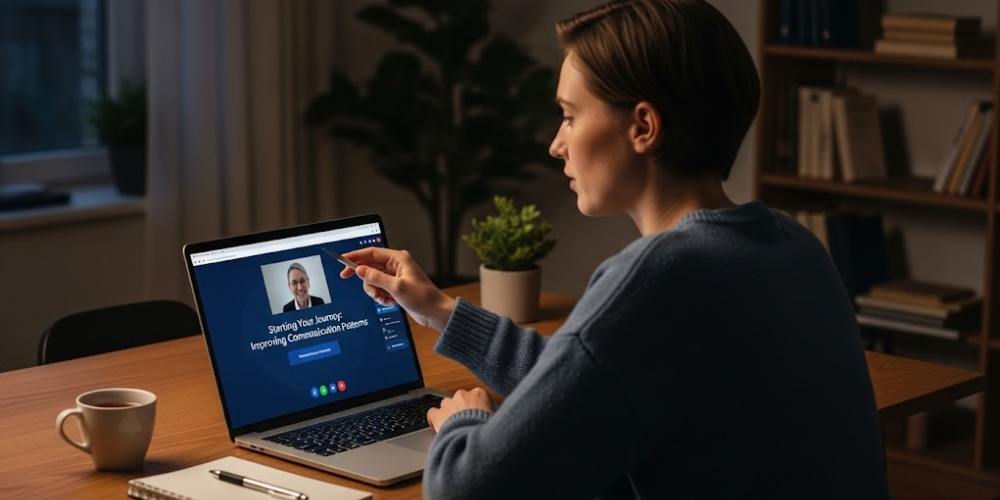
The relationship problem individual therapy actually solves
Most couples assume "we need couples therapy." But a large part of recurring conflict comes from individual patterns—anxiety, avoidance, anger spikes, defensive communication, unresolved history—that one partner brings into every argument.
🔁 You keep repeating the same reaction
Your partner says something and you escalate, shut down, or go cold—before you've even thought about it. That's a personal regulation issue, not just a relationship issue.
😰 Anxiety or stress is bleeding into the relationship
Work stress, financial worry, or past experiences make you interpret neutral behaviors as threats. Individual therapy helps you separate internal noise from actual conflict.
🚪 Your partner won't go to therapy
When one partner changes how they communicate and de-escalate, the entire dynamic shifts. You don't need two people in therapy to get a different outcome.
💬 You don't know how to say it without it becoming a fight
A therapist can help you practice how to bring up hard topics, make requests clearly, and respond to defensiveness without matching it.
How BetterHelp works (step by step)
Complete a short questionnaire
You share your concerns, communication preferences, therapist preferences (gender, specialty, cultural background), and schedule. This takes around 5–10 minutes.
Get matched in 24–48 hours
BetterHelp's algorithm matches you with a licensed therapist. All therapists meet state licensing requirements. [web:380] You can switch at no extra cost if the first match doesn't feel right.
Choose how you communicate
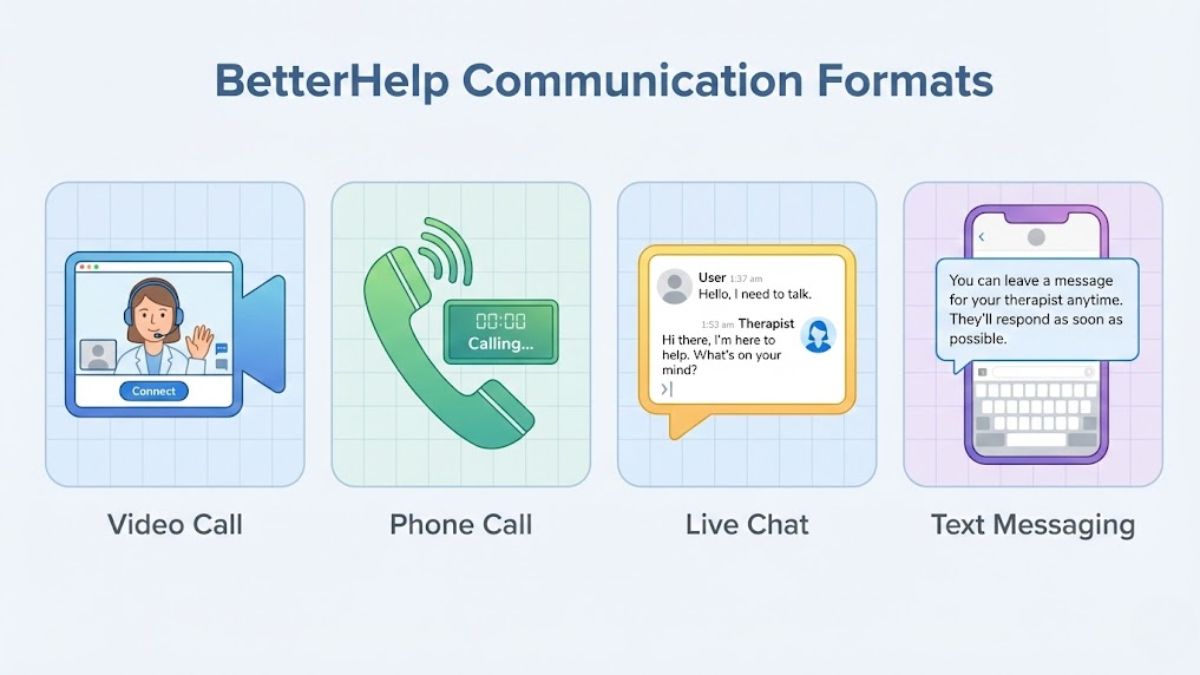
Sessions can be video, phone, live chat, or text messaging. [web:386] Most live sessions run 30–45 minutes. You can also message your therapist between sessions anytime.
Use worksheets and Groupinars between sessions
Your therapist can assign worksheets for reflection. BetterHelp also offers weekly live Groupinar sessions on topics including communication, stress, and relationship skills. [web:377]
Cancel or pause anytime
Plans are subscription-based. You can cancel, pause, or change therapists at any time. [web:379] There's no long-term commitment required.
BetterHelp cost in 2026 (honest breakdown)
BetterHelp pricing ranges from approximately $65 to $100 per week, billed every four weeks. [web:376][web:379] Your exact price depends on location, preferences, and therapist availability.
| Cost item | BetterHelp | Traditional in-person therapy |
|---|---|---|
| Weekly cost | ~$65–$100/week | $120–$220 per session |
| Monthly estimate | ~$260–$400/month | $480–$880/month (4 sessions) |
| Between-session contact | Unlimited messaging | Usually none |
| Switching therapist | Free, anytime | Often requires restart fee |
| Financial assistance | Available to qualifying users | Varies by provider |
Cost strategy: Use BetterHelp for 6–8 weeks to stabilize your side of the pattern (reactivity, communication habits), then pair it with a free couples tool (scripts, workbook) for daily practice. This is usually more cost-effective than a longer solo therapy run.
Pros, cons & honest limits
✅ What BetterHelp does well
- Fast matching (24–48 hours vs. weeks for in-person).
- Flexible formats—video, phone, chat, messaging.
- Affordable compared to traditional therapy.
- Messaging between sessions adds continuity.
- Large network of licensed therapists including LMFTs.
- No long-term commitment; cancel anytime.
⚠️ Limitations to know
- Individual therapy, not couples sessions (use Regain for that).
- Therapist response time to messages can vary.
- Not covered by most insurance plans (check before signing up).
- Quality can vary—switching is free but takes time.
- Not suitable as a primary resource if there is danger or crisis.
🔄 Best alternatives
- Regain — for couples sessions together.
- Couples workbooks — lower cost, self-guided.
- In-person scripts — free structured conversation guides.
Important safety note: BetterHelp is not designed for crisis situations, domestic violence, or coercive control. If you feel unsafe, prioritize a local hotline or shelter resource first.
How to use BetterHelp to improve your relationship (practical plan)
Individual therapy works better when you give it a specific goal. Here's a 4-week starter focus that links your BetterHelp sessions to your actual relationship patterns.
Week 1–2: Map your trigger pattern
Bring one real fight example to your therapist. Focus on: what triggered you, how your body responded, what you said or did, and what you wish had happened instead.
Week 2–3: Practice one response change
With your therapist, choose one replacement behavior (e.g., pause 20 seconds before responding, use "I feel" instead of "you always"). Repeat it in low-stakes moments first.
Week 3–4: Bring it into a real conversation
Try one structured conversation with your partner using your new response. Use the in-person scripts from FamilyBridge for structure. Debrief with your therapist what worked.

Frequently Asked Questions
BetterHelp's pricing in 2026 ranges from approximately $65 to $100 per week, billed every four weeks ($260–$400/month). The exact price depends on your location, preferences, and therapist availability. BetterHelp also offers a financial assistance option for those who qualify. Compared to traditional in-person therapy (typically $120–$220 per session, with no between-session contact), BetterHelp can be a more affordable option for continuous weekly support including messaging. Confirm your exact rate during sign-up before committing to the subscription.
Yes—and often more than people expect. Relationship conflict rarely comes from the other person alone. When your own anxiety, reactivity, old patterns, or communication habits are fueling the cycle, individual therapy directly addresses your side of the equation. By improving how you regulate emotions, interpret your partner's behavior, and respond under stress, you change the interaction dynamic even if your partner never attends a single session. This is especially valuable if your partner is not yet ready for couples therapy—your changes can create the conditions that make them more open to joining later.
BetterHelp states that most users are matched with a licensed therapist within 24–48 hours after completing the sign-up questionnaire. The questionnaire covers your concerns, preferred communication style, and therapist preferences, which allows their matching algorithm to find the best available fit. You can switch therapists at no extra cost if the first match doesn't feel right—no pressure to stick with a poor fit. Sessions can begin as soon as your therapist confirms availability, which is typically within the same week of signing up.
BetterHelp is primarily an individual therapy platform, while Regain (operated by BetterHelp's parent company) is designed specifically for couples and partners to work with one therapist together. If your relationship issues involve your personal triggers, anxiety, reactivity, or how you communicate under stress, BetterHelp's individual model is a strong starting point. If you need both partners to address shared patterns, trust, and conflict management with a shared therapist, Regain is the better fit. Many couples use both: one partner starts on BetterHelp individually, then both move to Regain for joint sessions once they're ready.
Educational use only. If you feel unsafe or there is intimidation, coercion, or violence, prioritize safety and seek local support resources.