January 12, 2026

5 Last-Minute Valentine’s Gifts That Are Actually Thoughtful (Instant Download) ⏰ Valentine’s Day Countdown: 32 Days 0 Hours Left | 🎁 Limited Time: Save 20% on […]


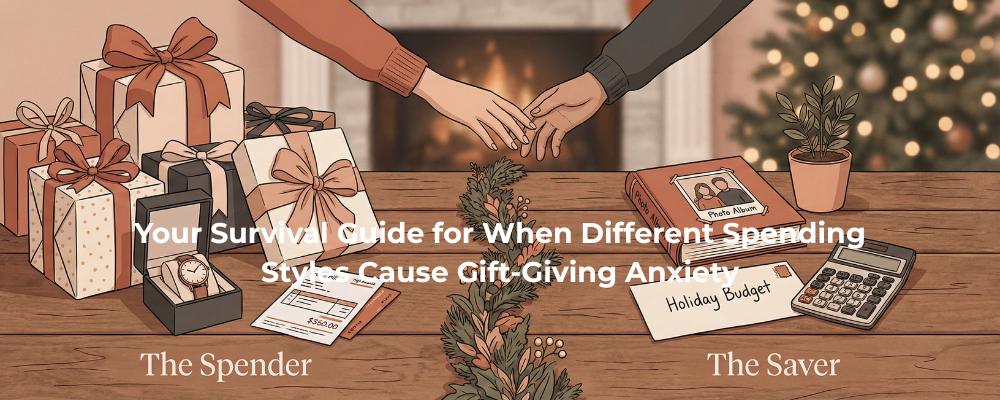
Feeling that familiar holiday dread creep in? You're not alone. This guide is for you if your partner’s idea of a thoughtful gift involves a hefty price tag while you’re trying to stick to a budget (or vice-versa). We’re going to cut to the chase and give you real, practical steps for navigating different spending styles with your partner, so you can finally ditch the financial arguments and actually enjoy the act of giving again.
Does your stomach do a little flip-flop when you think about exchanging presents with your partner? I see you. It’s that time of year again, and for so many of us, the twinkling lights and festive music are drowned out by the silent hum of anxiety. You want it to be a magical, connecting experience, but instead, you're bracing for the inevitable clash over the credit card bill. It’s a lonely feeling, but trust me, you are far from the only one going through this.
This tension has a name: gift-giving anxiety. It’s that knot in your gut born from financial pressure, the fear of choosing the “wrong” thing, or the awkwardness of receiving something way over the top. When you and your partner have different spending styles—maybe one of you is a natural saver who values practicality, and the other expresses love through lavish generosity—this anxiety can hit an all-time high. The sheer financial stress over gift giving can turn a season of joy into a minefield of potential arguments and hurt feelings.
But here’s the thing: this is not just about money. Not really. When your partner spends what feels like an insane amount, it can feel like they're disregarding your shared financial goals. And when your more modest, thoughtful gift is met with a lukewarm response, it can feel like a personal rejection. This is the heart of the issue for so many, and successfully navigating different spending styles with your partner is about more than just numbers; it's about feeling seen, heard, and respected. It’s about getting back on the same team.
So, let’s make a pact to do things differently this year. This article is your blueprint for peace. I’m going to walk you through exactly why this is such an emotional topic, provide clear communication scripts that actually work, and share creative strategies that go way beyond just learning how to set a holiday gift budget. Think of me as your friend who’s been there and is ready to help you find a middle ground that feels good for both of you.
The constant tension is exhausting, and it’s one of the biggest challenges that gift giving anxiety couples face year after year. The good news? It doesn’t have to be your story. By tackling this head-on with a little bit of understanding and a solid plan, you can stop the cycle. You can transform the source of your financial stress over gift giving into an opportunity to understand each other better and build traditions that truly reflect your shared love, not just your bank accounts.
Let's get right into the heart of it. Why does a simple act of giving a present feel so incredibly complicated? Because it’s almost never about the object itself. For centuries, giving gifts has been the glue that holds our social fabric together. It’s how we signal trust, appreciation, and belonging. When you give a gift, you’re not just handing over a thing; you’re sending a message that says, “I see you. I value you. You matter to me.” And that carries a ton of emotional weight.
So when you feel that familiar dread, what’s really going on inside your head? Your gift-giving anxiety is likely a cocktail of a few very specific fears. There’s the perfectionist’s panic—the desperate search for that one "perfect" gift that will be met with pure joy. Then, the financial strain kicks in, that cold worry about how you’ll afford the expectations you think people have. You also might be grappling with social anxiety, a deep-seated fear of being judged for your choice, whether it’s seen as too cheap, too extravagant, or just plain thoughtless.
To really understand the conflict, you have to understand the players. We all fall into certain financial archetypes, and recognizing them is half the battle. You might be living with "The Spender," someone who genuinely equates the size of the price tag with the size of their love. Or maybe you're "The Saver," the person who sees a lavish gift not as an act of love, but as a reckless decision that jeopardizes your family's security. Then there's "The Minimalist," who would rather have a weekend trip than another sweater, and "The Debtor," who spends out of a crushing sense of obligation, often pushing their finances to the brink.
Our feelings about a $50 versus a $500 gift aren’t random; they are deeply ingrained scripts from our past. Think about your own upbringing—what I call your "money story." If you grew up in a household where money was tight, seeing a huge credit card bill can trigger a visceral sense of panic. But if your partner came from a family where grand gestures were the norm, they might see an expensive watch as a standard, beautiful expression of affection. Neither of you is wrong; you're just operating from completely different emotional rulebooks. This is often where the real friction lies.
And we can't forget the work of Dr. Gary Chapman. For some people, "Receiving Gifts" is their primary love language. It’s the tangible, physical proof that they are cherished. If your partner’s love language is gifts and you’re a minimalist saver, you can see how things get messy, fast. They might genuinely feel unloved by your practical, budget-friendly gift, while you feel completely misunderstood and unappreciated for your thoughtfulness. The disconnect isn’t about greed; it's about speaking two different languages of affection.
This is where the rubber meets the road, isn't it? The theoretical differences in your money stories crash right into the reality of the holiday season. The arguments that bubble up feel like they're about a sweater or a gadget, but they are so much bigger than that. They are about feeling like your core values are being attacked by the person who is supposed to be your biggest ally. The whole situation can be a nightmare for gift giving anxiety couples who feel stuck in the same loop every year.
Here’s the scene I hear about most often. The Spender comes home, bursting with excitement over the high-end espresso machine they bought for their partner, the Saver. The Spender sees it as the ultimate "I love you," a daily luxury to be enjoyed. But the Saver’s heart sinks. They don't see an espresso machine; they see a car payment, a threat to the vacation fund, and a dose of completely unnecessary financial risk. The Spender feels rejected, their grand gesture dismissed as foolish. The Saver feels unheard and terrified by what they see as irresponsibility. It’s a perfect storm of misunderstanding.
Let's talk about something that can feel really uncomfortable: when one of you makes significantly more money. The higher earner might overspend, genuinely wanting to provide a wonderful experience, but inadvertently making their partner feel small or inadequate. I’ve seen this create so much shame. The lower-earning partner feels this immense pressure to reciprocate in a way they simply can’t afford, turning what should be a joyful moment into a painful reminder of their financial disparity. It can breed resentment faster than almost anything else.
The meaning you pour into a gift can get completely lost in translation across the financial divide. The Spender’s expensive necklace isn’t meant to be a financial burden; it’s meant to say, “You are worth the very best.” But the Saver receives it and hears, “I don’t respect our shared goals.” On the flip side, the Saver’s carefully handmade photo album is meant to say, “I spent hours of my life on this because I cherish our memories.” The Spender might see it and, if they’re not careful, unconsciously think, “Is that all I’m worth?” It’s brutal.
Have you ever opened a gift that was so extravagant it made your stomach clench? That feeling isn't gratitude; it's the beginning of what I call "reciprocity anxiety." That beautiful, expensive present suddenly feels like a debt you have to repay. The joy is instantly replaced by a stressful calculation: "How on earth am I going to match this?" This vicious cycle of guilt and obligation isn't generous. It’s a trap that can build a wall of silent resentment brick by brick, especially when you feel ongoing financial stress over gift giving.
Okay, enough about the problem. You’re here for the solutions, and I promise, they exist. Moving past this requires a clear plan—a blueprint. It’s not about finding a magical, one-size-fits-all answer. It’s about building a new framework for how you talk about and handle this stuff together, as a team. True success in navigating different spending styles with your partner comes from proactive, honest conversations, not last-minute, desperate arguments in a checkout line.
The single best piece of advice I can give you is this: have the conversation before you need to. Don't wait until you're stressed and surrounded by tinsel. Schedule a calm moment—a "State of the Union" for your finances—in October or early November. You can open with something gentle like, "Hey, I want to make sure the holidays feel joyful and not stressful this year. Can we talk about a game plan for gifts so we're on the same page?" This frames it as a collaborative mission, not a confrontation.
This is where you get practical. The goal here is to create a sense of safety and predictability for both of you. This is the core of how to set a holiday gift budget. Maybe you agree on a specific dollar amount for each other. Or maybe you set a total holiday spending cap that includes gifts, travel, and food. Some couples I know decide to only buy for the kids. The specific rule doesn't matter as much as the fact that you created and agreed to it together. That mutual agreement is everything.
I am a huge advocate for the shared wish list. It is the perfect compromise. It completely removes the anxiety of guessing what the other person wants. The Spender gets to joyfully buy something they know will be loved, and the Saver gets the peace of mind of a clear price point—and the ability to hunt for a good deal! Using a simple app or a shared note allows you to put multiple ideas at different price points, giving your partner options that respect your budget. It’s a total game-changer.
How you say things matters just as much as what you say. When you're discussing this sensitive topic, banish blame from your vocabulary. Instead of launching an attack like, "You always spend way too much money," try reframing it from your perspective. "I feel anxious when I see big credit card bills because I'm worried about our goal of buying a house." This simple switch turns an accusation into a vulnerable expression of your feelings, inviting empathy instead of defensiveness from your partner.
If the friction over material gifts feels too great, consider redirecting that energy entirely. This is a powerful opportunity to co-create new traditions that reflect your shared values. Maybe you decide that your "gift" to each other will be an annual weekend getaway. Perhaps you'll spend a day volunteering for a cause you both believe in. You could even start a tradition of cooking an elaborate, celebratory meal together. This turns a point of conflict into a chance to connect more deeply.
So much of our anxiety is tied to the flawed idea that the best gifts are the most expensive ones. It's a myth sold to us every holiday season. But you have the power to reject that narrative and redefine what "value" truly means in your relationship. The most memorable and cherished gifts are rarely the ones that cost the most; they're the ones that prove you've been paying attention. This is a critical step for gift giving anxiety couples looking for a breakthrough.
Think about the best presents you've ever received. I’m willing to bet many of them weren’t things at all. Research from Cornell University has consistently shown that experiences—like concert tickets, a cooking class, or a planned day trip—bring people more lasting happiness than material possessions. Experiences become a part of our identity and strengthen our bonds with the people we share them with. The memory of a hilarious weekend trip will bring you joy long after a new gadget is obsolete.
Never underestimate the immense value of giving your skills and your time. This is a beautiful way to show you care. Create a personalized "coupon book" with offers your partner would genuinely love: a weekend of uninterrupted video game time, your professional help organizing their taxes, or a promise to handle every single school drop-off for a month. These acts of service can feel more loving and supportive than any store-bought item. You are giving them a piece of your life, and that is priceless.
Personalization is the ultimate luxury. Anyone can buy something expensive, but a gift that shows deep thought is a rare treasure. Frame a map of a place that’s meaningful to your relationship. Create a "story of us" photo album. Find a vintage copy of their favorite childhood book. Curate a playlist and write down a sentence about why each song reminds you of them. These gifts scream, "I know you, I listen to you, and I cherish you." A thoughtful approach to navigating different spending styles with your partner often starts right here.
If there’s a bigger-ticket item that you know your loved one would adore, don’t feel like you have to shoulder the burden alone. Pooling your resources with siblings or friends is a brilliant strategy. It allows you to give that "wow" gift—the one you know they want but would never buy for themselves—without causing any one person to overextend their finances. This is a fantastic solution that reduces individual financial stress over gift giving and fosters a wonderful sense of communal generosity. And honestly, it simplifies things for everyone involved.
Finally, for the person in your life who is passionate about a cause or who genuinely insists they "don't need anything," a philanthropic gift is a profoundly meaningful gesture. Making a donation to their favorite charity or animal shelter in their name is a gift that aligns with their values and makes a positive impact on the world. It’s a way of saying, “I love you, and I love what you care about.” It’s a perfect solution when learning how to set a holiday gift budget feels limiting, as it shifts the focus entirely off material goods and onto shared ideals.
Navigating the financial and emotional complexities of gift-giving when partners have different spending habits can be a significant source of stress. The core of this friction often stems from deep-seated "money stories" shaped by upbringing and personal experiences, leading to misunderstandings where one partner's generous gesture is perceived as reckless by the other. Overcoming this anxiety hinges on proactive communication, such as scheduling a "money talk" well before holidays to collaboratively set clear budgets and boundaries.
Successfully managing these differences also involves redefining the concept of a valuable gift. By shifting focus from high-cost material items to meaningful experiences, acts of service, or highly personalized, low-cost presents, couples can find common ground. Strategies like creating shared wish lists and pooling funds for group gifts can further alleviate financial pressure and ensure presents are genuinely desired, transforming a point of conflict into an opportunity for deeper connection and mutual understanding.
When a family member disregards a mutually established spending limit, it can create an awkward and frustrating situation. The immediate response should be one of grace; accept the gift thankfully in the moment to avoid causing a scene or embarrassing the giver. The crucial conversation must happen later, in a private and calm setting. You can express genuine appreciation for their generosity to show you value their intentions. Then, gently but firmly reiterate why your family established the budget, framing it as a collective effort to reduce financial pressure and maintain fairness among everyone. Explain that your goal is to emphasize shared time and connection over the monetary value of presents.
This approach reinforces your boundaries without creating lasting conflict. It communicates that while you love their thoughtful nature, adherence to the shared plan is important for your family’s comfort and financial well-being. This conversation helps prevent the "reciprocity anxiety" where receiving an overly expensive gift creates a stressful feeling of indebtedness. By addressing it directly, you can preemptively stop a cycle of escalating gift values in future years, keeping the focus on the spirit of the occasion rather than the price tags involved.
This common conflict requires a blend of empathy and creativity, focusing on the meaning behind the gift rather than its cost. The first step is to verbally acknowledge and validate your partner's love language. Make it clear that you understand that tangible, thoughtful gifts make them feel seen and cherished. This validation is critical and shows you are not dismissing their emotional needs. From there, you can collaboratively redefine what a "gift" looks like in your relationship. Instead of one large, expensive item that triggers your financial anxiety, propose a series of smaller, highly personal gifts spread throughout the year.
This strategy can satisfy both partners. Your partner receives consistent, tangible reminders of your affection, fulfilling their love language. You, as the saver, can manage these smaller costs within a pre-agreed budget. Focus on gifts that require thought and effort over money, like a curated photo album, a framed map of a meaningful location, or a handmade item related to their hobbies. This approach proves that you are listening and care deeply, while also honoring your own value of financial prudence and minimalism.
Approaching this conversation requires warmth and a focus on an alternative way to celebrate your friendship. It is best to be direct but kind, and to propose a new plan in the same breath. You could reach out well before the gift-giving season and say something like, "I'm really focusing on my financial goals this year, so I'm scaling back on gift exchanges. What I would truly love, though, is to celebrate our friendship by [suggesting an activity]." This immediately shifts the emphasis from a material exchange to the far more valuable gift of shared time and experience.
Suggesting a specific, enjoyable activity is key. Ideas could include grabbing coffee, going for a festive walk, having a potluck dinner, or dedicating a night to a movie marathon. By proposing a plan, you show that your decision is not about diminishing the friendship but about deepening it in a way that doesn't involve financial strain. Most friends will be understanding and may even feel relieved, as they could be experiencing similar financial pressures. This reframes the holiday interaction around connection, which is the original purpose of giving.
Receiving a gift that induces financial discomfort or a sense of obligation, known as "reciprocity anxiety," is a valid and common feeling. Whether to address it depends heavily on the relationship and if this is a recurring pattern. If it is a one-time occurrence from a distant relative, it may be best to simply express your gratitude and move on. However, if it's part of an ongoing cycle with a close partner or immediate family member, a gentle conversation is necessary to prevent future stress and resentment from building.
Start by expressing sincere gratitude for the gift and the thought behind it. After showing your appreciation, you can transition by using "I feel" statements to explain your discomfort without assigning blame. You might say, "I feel a bit overwhelmed because I know this was so generous, and I worry about you spending so much." You can then gently introduce a conversation about gift-giving philosophies for the future, suggesting a shared budget or a focus on lower-cost experiences. This honors their generosity while establishing healthier boundaries for future exchanges.
When extended families have clashing spending styles, managing children's gifts requires proactive communication and clear boundary-setting. The most effective strategy is to talk with grandparents and other relatives well in advance of any holiday. Frame the conversation around your child's best interests and your desire to avoid them being overwhelmed or developing materialistic expectations. One excellent tool is a shared online wish list. This allows you to curate a list of desired items across a wide range of price points, giving family members options that fit their budget while ensuring the child receives something they actually want.
Another powerful strategy is to suggest contributing to a larger, shared goal instead of buying individual presents. This could be a contribution to a college savings fund, a fund for music lessons, or a significant item like a bicycle that multiple family members can chip in for. This approach allows generous relatives to give substantially while respecting your wishes to limit the sheer volume of physical toys. It channels their generosity into a long-term, valuable gift and teaches the child about saving for a meaningful goal.
Understanding that your financial behaviors are rooted in deeply ingrained "money stories" from your upbringing is the first step toward empathy. One of you may have grown up in scarcity, causing a visceral fear of debt, while the other may come from a family where lavish spending was a primary expression of love. To bridge this gap, schedule a calm time to share these stories without judgment. Discuss what money meant in your respective households. Was it a source of stress or security? Was it discussed openly or treated as a taboo subject?
This conversation is not about deciding who is right; it's about understanding the emotional rulebook each of you operates from. Once you see the origin of your partner’s financial archetype—be they a "Saver" or a "Spender"—their actions during the holidays become less about personal disregard and more about a learned behavior. From this place of mutual understanding, you can co-create a new, shared approach. This involves setting explicit budgets that respect the Saver’s need for security while also creating room for the Spender to express affection in a way that feels generous within those agreed-upon boundaries.
Sources & Further Reading
Gilovich, T., Kumar, A., & Jampol, L. (2015). A wonderful life: experiential consumption and the pursuit of happiness. Journal of Consumer Psychology, 25(1), 152-165. https://psych.cornell.edu/
The 5 Love Languages® Official Site. https://www.5lovelanguages.com/
Tags: managing financial anxiety during the holidays, communication tips for couples with different spending habits, creative gift ideas that reduce financial stress, how to talk to your partner about a holiday budget
Feeling that familiar holiday dread creep in? You're not alone. This guide is for you if your partner’s idea of a thoughtful gift involves a hefty price tag while you’re trying to stick to a budget (or vice-versa). We’re going to cut to the chase and give you real, practical steps for navigating different spending styles with your partner, so you can finally ditch the financial arguments and actually enjoy the act of giving again.
Does your stomach do a little flip-flop when you think about exchanging presents with your partner? I see you. It’s that time of year again, and for so many of us, the twinkling lights and festive music are drowned out by the silent hum of anxiety. You want it to be a magical, connecting experience, but instead, you're bracing for the inevitable clash over the credit card bill. It’s a lonely feeling, but trust me, you are far from the only one going through this.
This tension has a name: gift-giving anxiety. It’s that knot in your gut born from financial pressure, the fear of choosing the “wrong” thing, or the awkwardness of receiving something way over the top. When you and your partner have different spending styles—maybe one of you is a natural saver who values practicality, and the other expresses love through lavish generosity—this anxiety can hit an all-time high. The sheer financial stress over gift giving can turn a season of joy into a minefield of potential arguments and hurt feelings.
But here’s the thing: this is not just about money. Not really. When your partner spends what feels like an insane amount, it can feel like they're disregarding your shared financial goals. And when your more modest, thoughtful gift is met with a lukewarm response, it can feel like a personal rejection. This is the heart of the issue for so many, and successfully navigating different spending styles with your partner is about more than just numbers; it's about feeling seen, heard, and respected. It’s about getting back on the same team.
So, let’s make a pact to do things differently this year. This article is your blueprint for peace. I’m going to walk you through exactly why this is such an emotional topic, provide clear communication scripts that actually work, and share creative strategies that go way beyond just learning how to set a holiday gift budget. Think of me as your friend who’s been there and is ready to help you find a middle ground that feels good for both of you.
The constant tension is exhausting, and it’s one of the biggest challenges that gift giving anxiety couples face year after year. The good news? It doesn’t have to be your story. By tackling this head-on with a little bit of understanding and a solid plan, you can stop the cycle. You can transform the source of your financial stress over gift giving into an opportunity to understand each other better and build traditions that truly reflect your shared love, not just your bank accounts.
Let's get right into the heart of it. Why does a simple act of giving a present feel so incredibly complicated? Because it’s almost never about the object itself. For centuries, giving gifts has been the glue that holds our social fabric together. It’s how we signal trust, appreciation, and belonging. When you give a gift, you’re not just handing over a thing; you’re sending a message that says, “I see you. I value you. You matter to me.” And that carries a ton of emotional weight.
So when you feel that familiar dread, what’s really going on inside your head? Your gift-giving anxiety is likely a cocktail of a few very specific fears. There’s the perfectionist’s panic—the desperate search for that one "perfect" gift that will be met with pure joy. Then, the financial strain kicks in, that cold worry about how you’ll afford the expectations you think people have. You also might be grappling with social anxiety, a deep-seated fear of being judged for your choice, whether it’s seen as too cheap, too extravagant, or just plain thoughtless.
To really understand the conflict, you have to understand the players. We all fall into certain financial archetypes, and recognizing them is half the battle. You might be living with "The Spender," someone who genuinely equates the size of the price tag with the size of their love. Or maybe you're "The Saver," the person who sees a lavish gift not as an act of love, but as a reckless decision that jeopardizes your family's security. Then there's "The Minimalist," who would rather have a weekend trip than another sweater, and "The Debtor," who spends out of a crushing sense of obligation, often pushing their finances to the brink.
Our feelings about a $50 versus a $500 gift aren’t random; they are deeply ingrained scripts from our past. Think about your own upbringing—what I call your "money story." If you grew up in a household where money was tight, seeing a huge credit card bill can trigger a visceral sense of panic. But if your partner came from a family where grand gestures were the norm, they might see an expensive watch as a standard, beautiful expression of affection. Neither of you is wrong; you're just operating from completely different emotional rulebooks. This is often where the real friction lies.
And we can't forget the work of Dr. Gary Chapman. For some people, "Receiving Gifts" is their primary love language. It’s the tangible, physical proof that they are cherished. If your partner’s love language is gifts and you’re a minimalist saver, you can see how things get messy, fast. They might genuinely feel unloved by your practical, budget-friendly gift, while you feel completely misunderstood and unappreciated for your thoughtfulness. The disconnect isn’t about greed; it's about speaking two different languages of affection.
This is where the rubber meets the road, isn't it? The theoretical differences in your money stories crash right into the reality of the holiday season. The arguments that bubble up feel like they're about a sweater or a gadget, but they are so much bigger than that. They are about feeling like your core values are being attacked by the person who is supposed to be your biggest ally. The whole situation can be a nightmare for gift giving anxiety couples who feel stuck in the same loop every year.
Here’s the scene I hear about most often. The Spender comes home, bursting with excitement over the high-end espresso machine they bought for their partner, the Saver. The Spender sees it as the ultimate "I love you," a daily luxury to be enjoyed. But the Saver’s heart sinks. They don't see an espresso machine; they see a car payment, a threat to the vacation fund, and a dose of completely unnecessary financial risk. The Spender feels rejected, their grand gesture dismissed as foolish. The Saver feels unheard and terrified by what they see as irresponsibility. It’s a perfect storm of misunderstanding.
Let's talk about something that can feel really uncomfortable: when one of you makes significantly more money. The higher earner might overspend, genuinely wanting to provide a wonderful experience, but inadvertently making their partner feel small or inadequate. I’ve seen this create so much shame. The lower-earning partner feels this immense pressure to reciprocate in a way they simply can’t afford, turning what should be a joyful moment into a painful reminder of their financial disparity. It can breed resentment faster than almost anything else.
The meaning you pour into a gift can get completely lost in translation across the financial divide. The Spender’s expensive necklace isn’t meant to be a financial burden; it’s meant to say, “You are worth the very best.” But the Saver receives it and hears, “I don’t respect our shared goals.” On the flip side, the Saver’s carefully handmade photo album is meant to say, “I spent hours of my life on this because I cherish our memories.” The Spender might see it and, if they’re not careful, unconsciously think, “Is that all I’m worth?” It’s brutal.
Have you ever opened a gift that was so extravagant it made your stomach clench? That feeling isn't gratitude; it's the beginning of what I call "reciprocity anxiety." That beautiful, expensive present suddenly feels like a debt you have to repay. The joy is instantly replaced by a stressful calculation: "How on earth am I going to match this?" This vicious cycle of guilt and obligation isn't generous. It’s a trap that can build a wall of silent resentment brick by brick, especially when you feel ongoing financial stress over gift giving.
Okay, enough about the problem. You’re here for the solutions, and I promise, they exist. Moving past this requires a clear plan—a blueprint. It’s not about finding a magical, one-size-fits-all answer. It’s about building a new framework for how you talk about and handle this stuff together, as a team. True success in navigating different spending styles with your partner comes from proactive, honest conversations, not last-minute, desperate arguments in a checkout line.
The single best piece of advice I can give you is this: have the conversation before you need to. Don't wait until you're stressed and surrounded by tinsel. Schedule a calm moment—a "State of the Union" for your finances—in October or early November. You can open with something gentle like, "Hey, I want to make sure the holidays feel joyful and not stressful this year. Can we talk about a game plan for gifts so we're on the same page?" This frames it as a collaborative mission, not a confrontation.
This is where you get practical. The goal here is to create a sense of safety and predictability for both of you. This is the core of how to set a holiday gift budget. Maybe you agree on a specific dollar amount for each other. Or maybe you set a total holiday spending cap that includes gifts, travel, and food. Some couples I know decide to only buy for the kids. The specific rule doesn't matter as much as the fact that you created and agreed to it together. That mutual agreement is everything.
I am a huge advocate for the shared wish list. It is the perfect compromise. It completely removes the anxiety of guessing what the other person wants. The Spender gets to joyfully buy something they know will be loved, and the Saver gets the peace of mind of a clear price point—and the ability to hunt for a good deal! Using a simple app or a shared note allows you to put multiple ideas at different price points, giving your partner options that respect your budget. It’s a total game-changer.
How you say things matters just as much as what you say. When you're discussing this sensitive topic, banish blame from your vocabulary. Instead of launching an attack like, "You always spend way too much money," try reframing it from your perspective. "I feel anxious when I see big credit card bills because I'm worried about our goal of buying a house." This simple switch turns an accusation into a vulnerable expression of your feelings, inviting empathy instead of defensiveness from your partner.
If the friction over material gifts feels too great, consider redirecting that energy entirely. This is a powerful opportunity to co-create new traditions that reflect your shared values. Maybe you decide that your "gift" to each other will be an annual weekend getaway. Perhaps you'll spend a day volunteering for a cause you both believe in. You could even start a tradition of cooking an elaborate, celebratory meal together. This turns a point of conflict into a chance to connect more deeply.
So much of our anxiety is tied to the flawed idea that the best gifts are the most expensive ones. It's a myth sold to us every holiday season. But you have the power to reject that narrative and redefine what "value" truly means in your relationship. The most memorable and cherished gifts are rarely the ones that cost the most; they're the ones that prove you've been paying attention. This is a critical step for gift giving anxiety couples looking for a breakthrough.
Think about the best presents you've ever received. I’m willing to bet many of them weren’t things at all. Research from Cornell University has consistently shown that experiences—like concert tickets, a cooking class, or a planned day trip—bring people more lasting happiness than material possessions. Experiences become a part of our identity and strengthen our bonds with the people we share them with. The memory of a hilarious weekend trip will bring you joy long after a new gadget is obsolete.
Never underestimate the immense value of giving your skills and your time. This is a beautiful way to show you care. Create a personalized "coupon book" with offers your partner would genuinely love: a weekend of uninterrupted video game time, your professional help organizing their taxes, or a promise to handle every single school drop-off for a month. These acts of service can feel more loving and supportive than any store-bought item. You are giving them a piece of your life, and that is priceless.
Personalization is the ultimate luxury. Anyone can buy something expensive, but a gift that shows deep thought is a rare treasure. Frame a map of a place that’s meaningful to your relationship. Create a "story of us" photo album. Find a vintage copy of their favorite childhood book. Curate a playlist and write down a sentence about why each song reminds you of them. These gifts scream, "I know you, I listen to you, and I cherish you." A thoughtful approach to navigating different spending styles with your partner often starts right here.
If there’s a bigger-ticket item that you know your loved one would adore, don’t feel like you have to shoulder the burden alone. Pooling your resources with siblings or friends is a brilliant strategy. It allows you to give that "wow" gift—the one you know they want but would never buy for themselves—without causing any one person to overextend their finances. This is a fantastic solution that reduces individual financial stress over gift giving and fosters a wonderful sense of communal generosity. And honestly, it simplifies things for everyone involved.
Finally, for the person in your life who is passionate about a cause or who genuinely insists they "don't need anything," a philanthropic gift is a profoundly meaningful gesture. Making a donation to their favorite charity or animal shelter in their name is a gift that aligns with their values and makes a positive impact on the world. It’s a way of saying, “I love you, and I love what you care about.” It’s a perfect solution when learning how to set a holiday gift budget feels limiting, as it shifts the focus entirely off material goods and onto shared ideals.
Navigating the financial and emotional complexities of gift-giving when partners have different spending habits can be a significant source of stress. The core of this friction often stems from deep-seated "money stories" shaped by upbringing and personal experiences, leading to misunderstandings where one partner's generous gesture is perceived as reckless by the other. Overcoming this anxiety hinges on proactive communication, such as scheduling a "money talk" well before holidays to collaboratively set clear budgets and boundaries.
Successfully managing these differences also involves redefining the concept of a valuable gift. By shifting focus from high-cost material items to meaningful experiences, acts of service, or highly personalized, low-cost presents, couples can find common ground. Strategies like creating shared wish lists and pooling funds for group gifts can further alleviate financial pressure and ensure presents are genuinely desired, transforming a point of conflict into an opportunity for deeper connection and mutual understanding.
When a family member disregards a mutually established spending limit, it can create an awkward and frustrating situation. The immediate response should be one of grace; accept the gift thankfully in the moment to avoid causing a scene or embarrassing the giver. The crucial conversation must happen later, in a private and calm setting. You can express genuine appreciation for their generosity to show you value their intentions. Then, gently but firmly reiterate why your family established the budget, framing it as a collective effort to reduce financial pressure and maintain fairness among everyone. Explain that your goal is to emphasize shared time and connection over the monetary value of presents.
This approach reinforces your boundaries without creating lasting conflict. It communicates that while you love their thoughtful nature, adherence to the shared plan is important for your family’s comfort and financial well-being. This conversation helps prevent the "reciprocity anxiety" where receiving an overly expensive gift creates a stressful feeling of indebtedness. By addressing it directly, you can preemptively stop a cycle of escalating gift values in future years, keeping the focus on the spirit of the occasion rather than the price tags involved.
This common conflict requires a blend of empathy and creativity, focusing on the meaning behind the gift rather than its cost. The first step is to verbally acknowledge and validate your partner's love language. Make it clear that you understand that tangible, thoughtful gifts make them feel seen and cherished. This validation is critical and shows you are not dismissing their emotional needs. From there, you can collaboratively redefine what a "gift" looks like in your relationship. Instead of one large, expensive item that triggers your financial anxiety, propose a series of smaller, highly personal gifts spread throughout the year.
This strategy can satisfy both partners. Your partner receives consistent, tangible reminders of your affection, fulfilling their love language. You, as the saver, can manage these smaller costs within a pre-agreed budget. Focus on gifts that require thought and effort over money, like a curated photo album, a framed map of a meaningful location, or a handmade item related to their hobbies. This approach proves that you are listening and care deeply, while also honoring your own value of financial prudence and minimalism.
Approaching this conversation requires warmth and a focus on an alternative way to celebrate your friendship. It is best to be direct but kind, and to propose a new plan in the same breath. You could reach out well before the gift-giving season and say something like, "I'm really focusing on my financial goals this year, so I'm scaling back on gift exchanges. What I would truly love, though, is to celebrate our friendship by [suggesting an activity]." This immediately shifts the emphasis from a material exchange to the far more valuable gift of shared time and experience.
Suggesting a specific, enjoyable activity is key. Ideas could include grabbing coffee, going for a festive walk, having a potluck dinner, or dedicating a night to a movie marathon. By proposing a plan, you show that your decision is not about diminishing the friendship but about deepening it in a way that doesn't involve financial strain. Most friends will be understanding and may even feel relieved, as they could be experiencing similar financial pressures. This reframes the holiday interaction around connection, which is the original purpose of giving.
Receiving a gift that induces financial discomfort or a sense of obligation, known as "reciprocity anxiety," is a valid and common feeling. Whether to address it depends heavily on the relationship and if this is a recurring pattern. If it is a one-time occurrence from a distant relative, it may be best to simply express your gratitude and move on. However, if it's part of an ongoing cycle with a close partner or immediate family member, a gentle conversation is necessary to prevent future stress and resentment from building.
Start by expressing sincere gratitude for the gift and the thought behind it. After showing your appreciation, you can transition by using "I feel" statements to explain your discomfort without assigning blame. You might say, "I feel a bit overwhelmed because I know this was so generous, and I worry about you spending so much." You can then gently introduce a conversation about gift-giving philosophies for the future, suggesting a shared budget or a focus on lower-cost experiences. This honors their generosity while establishing healthier boundaries for future exchanges.
When extended families have clashing spending styles, managing children's gifts requires proactive communication and clear boundary-setting. The most effective strategy is to talk with grandparents and other relatives well in advance of any holiday. Frame the conversation around your child's best interests and your desire to avoid them being overwhelmed or developing materialistic expectations. One excellent tool is a shared online wish list. This allows you to curate a list of desired items across a wide range of price points, giving family members options that fit their budget while ensuring the child receives something they actually want.
Another powerful strategy is to suggest contributing to a larger, shared goal instead of buying individual presents. This could be a contribution to a college savings fund, a fund for music lessons, or a significant item like a bicycle that multiple family members can chip in for. This approach allows generous relatives to give substantially while respecting your wishes to limit the sheer volume of physical toys. It channels their generosity into a long-term, valuable gift and teaches the child about saving for a meaningful goal.
Understanding that your financial behaviors are rooted in deeply ingrained "money stories" from your upbringing is the first step toward empathy. One of you may have grown up in scarcity, causing a visceral fear of debt, while the other may come from a family where lavish spending was a primary expression of love. To bridge this gap, schedule a calm time to share these stories without judgment. Discuss what money meant in your respective households. Was it a source of stress or security? Was it discussed openly or treated as a taboo subject?
This conversation is not about deciding who is right; it's about understanding the emotional rulebook each of you operates from. Once you see the origin of your partner’s financial archetype—be they a "Saver" or a "Spender"—their actions during the holidays become less about personal disregard and more about a learned behavior. From this place of mutual understanding, you can co-create a new, shared approach. This involves setting explicit budgets that respect the Saver’s need for security while also creating room for the Spender to express affection in a way that feels generous within those agreed-upon boundaries.
Sources & Further Reading
Gilovich, T., Kumar, A., & Jampol, L. (2015). A wonderful life: experiential consumption and the pursuit of happiness. Journal of Consumer Psychology, 25(1), 152-165. https://psych.cornell.edu/
The 5 Love Languages® Official Site. https://www.5lovelanguages.com/
Tags: managing financial anxiety during the holidays, communication tips for couples with different spending habits, creative gift ideas that reduce financial stress, how to talk to your partner about a holiday budget