March 2, 2026

Apology Text to My Wife After I Yelled – 3 Real Versions That Help Apology Text to My Wife After I Yelled: 3 Versions That Actually […]




Feeling lost as the days get shorter and your partner pulls away? You're not alone. Seasonal Affective Disorder (SAD) can feel like an unwelcome guest in your marriage, creating distance and confusion. This guide is for you—the loving, worried spouse who is searching for answers on how to help a partner with seasonal depression. We'll walk you through understanding the illness, supporting your loved one, and, just as crucially, taking care of yourself in the process. It’s possible to navigate this together and come out stronger on the other side.
I want you to know, right from the start, that what you're feeling is valid. The frustration, the loneliness, the confusion… it's all real. It’s that time of year again when the light starts to fade, and maybe the light in your partner has started to dim, too. The person you share your life with might feel distant, irritable, or just perpetually exhausted. You find yourself asking, is it me? You might even be searching for answers because you feel that my partner's seasonal depression is pushing me away, and the silence in your home feels deafening.
It’s an incredibly isolating experience. You try to start a conversation, and it falls flat. You suggest a date night, but they have no energy. You’re left picking up the slack around the house, feeling more like a caretaker than a partner, and a little flicker of resentment starts to build. And the guilt that comes with that feeling? It’s heavy. You’re here because you love them, but living with a spouse with SAD is a challenge that no one prepares you for.
Think of Seasonal Affective Disorder as a very real, biologically-driven condition, not just a case of the "winter blues." It's a type of depression that follows a seasonal pattern, and it’s not a choice or a personality flaw. For many, the shift is as predictable as the changing leaves. Understanding this is the first step. You're not battling your partner; you are both battling a medical condition that has unfortunately invited itself into your relationship. The real work begins when you can see the illness as the source of the problem, which is why tackling seasonal affective disorder and relationship problems requires a team effort.
This isn’t just about getting through another long winter. It's about finding a new way to connect when connection feels impossible. It’s about learning how to help a partner with seasonal depression without losing yourself in the process. And I promise you, there is hope and there are practical things you can do. You don't have to just wait it out until spring.
You might feel like you're walking on eggshells, constantly worried about saying or doing the wrong thing. This guide is here to give you some solid ground to stand on. We’re going to cut to the chase and talk about what’s really going on and what you can actually do about it. The feeling that my partner's seasonal depression is pushing me away doesn't have to be your permanent reality. Recognizing the toll that living with a spouse with SAD takes on you is crucial. You’re not just a supporter; you’re an equal partner in this marriage, and your well-being matters immensely. The path forward involves both supporting them and supporting yourself. The seasonal affective disorder and relationship problems you face can be navigated, together.

Let's get one thing straight right off the bat: what your partner is experiencing is not just a bad mood. It’s not laziness. It’s not a choice. Seasonal Affective Disorder is a legitimate, recognized form of depression. The American Psychiatric Association classifies it as Major Depressive Disorder with a Seasonal Pattern. So when you hear someone casually dismiss it as the "winter blues," you have my full permission to get a little bit angry. Because that minimizes the very real struggle your partner, and by extension, you, are going through.
This isn't some vague feeling of blah. It’s a recurring depressive episode that hits like clockwork. For most, it begins in the fall, deepens through the winter months, and then, almost magically, subsides in the spring and summer. And for about 5% of adults in the U.S., this is their reality every single year. That’s millions of people whose entire emotional world is dictated by the calendar. It’s a pattern so predictable you could set your watch to it.
The symptoms aren't subtle when you know what to look for. Think about it. Are they sleeping ten, maybe twelve hours a night and still waking up feeling like they’ve been run over by a truck? That’s hypersomnia. Have they suddenly started craving pasta, bread, and every carb under the sun? That’s the intense appetite change and a hallmark of the condition. You’ll see the weight gain, the profound lack of energy—what doctors call "leaden paralysis"—where their limbs feel heavy. And worst of all, anhedonia. That's the clinical term for the loss of joy in things they used to love. The hobbies, the inside jokes, the shared passions… they just vanish.
Your partner isn't making this up; there's real biology at play here. The leading theory is that the reduced sunlight of winter messes with our internal clock, the circadian rhythm. This can cause a drop in serotonin, that brain chemical responsible for mood regulation. Imagine their brain’s "feel-good" supply suddenly getting cut off. At the same time, the darkness can trigger an overproduction of melatonin, the hormone that makes you sleepy. So, they are literally fighting a chemical battle that leaves them feeling depressed and exhausted.
You are in the unique position to see the pattern they might not even recognize in themselves. Is late October when the quietness starts? Does their irritability spike around Thanksgiving every year? Do they suddenly lose interest in planning for the holidays? Start connecting the dots. It’s the cyclical nature that screams SAD. Differentiating between a rough patch and a clinical issue is crucial, and recognizing this annual pattern is the biggest clue you have. Seeing the full picture is the first step when grappling with seasonal affective disorder and relationship problems.
These symptoms don't just exist in a vacuum. They cascade into every corner of your life together. Their inability to concentrate can put their job at risk. The fatigue means they can’t help with the kids’ homework or walk the dog. The social withdrawal means your shared circle of friends starts to shrink. This isn't just an internal struggle for them; it’s an external force that grinds daily life to a halt. And frankly, the reality of living with a spouse with SAD means you are often left to pick up all the pieces.
When your partner has SAD, it doesn't just affect them. It sends shockwaves through the very foundation of your relationship. The person you rely on, laugh with, and build a life with suddenly feels like a stranger living in your house. And the emotional toll this takes on you, the supporting spouse, is immense and often goes completely unacknowledged. You feel like a ship navigating a storm without a compass.
Depression steals words. Your partner might not have the energy or the emotional capacity to explain what they’re feeling. So, they withdraw. Conversations become one-sided, focused on logistics—who’s picking up milk, did the bill get paid? The deep, connecting talks that sustain a marriage simply disappear. You find yourself tiptoeing around, afraid to say the wrong thing, and that feeling of "walking on eggshells" becomes your new normal. The silence is deafening.
This is a tough one to talk about, but it’s real. The combination of crushing fatigue, low self-esteem, and a complete loss of interest in pleasure means both physical and emotional intimacy often grind to a halt. It’s not just about sex; it’s about the hand-holding, the spontaneous hugs, the shared glances across a room. When that physical connection evaporates, an emotional chasm can form. You start to feel more like roommates than soulmates.
Suddenly, you’re doing it all. You’re managing the household, the finances, the kids' schedules, and you’re also the sole source of emotional support. You’ve become a partner and a caregiver, and that's an exhausting, thankless job. A little voice in the back of your head starts whispering, this isn't fair. And that voice is the sound of resentment taking root. It’s a toxic feeling, made worse by the guilt you feel for even having it.
When your partner retreats, your shared social life retreats with them. You start declining invitations to parties, dinners with friends, and family gatherings because you know they can't handle it. Or worse, you go alone and spend the whole time making excuses for their absence. Before you know it, you're both isolated. This isolation is a dangerous amplifier for the very seasonal affective disorder and relationship problems you're trying to solve. You lose your support system right when you need it most.
Your logical brain knows this is an illness. But your heart? Your heart just feels the sting of their irritability or the coldness of their withdrawal. It’s almost impossible not to think, what did I do? You start to internalize their symptoms as a reflection of your worth or the health of your marriage. The constant feeling that my partner's seasonal depression is pushing me away is not just a feeling; it’s a painful daily experience that can make you question everything.
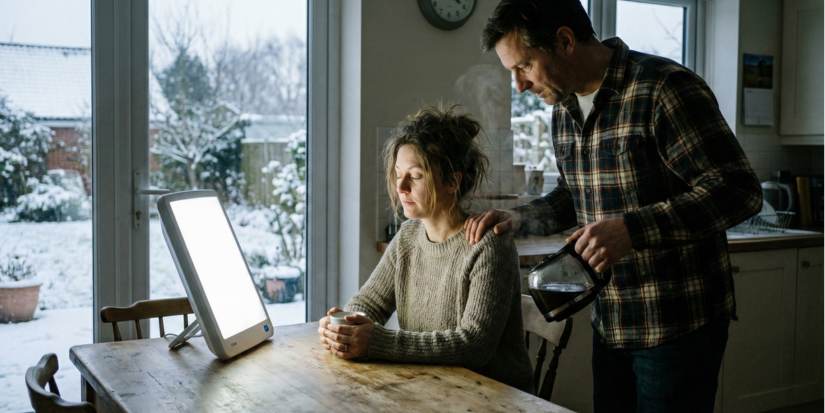
Feeling helpless is the absolute worst part of this. But I’m here to tell you that you are not helpless. You can’t cure their depression, no. But you can be a powerful, positive force in their recovery. It’s about shifting from a passive worrier to an active, strategic supporter. This is where you roll up your sleeves and get to work, together.
Stop asking, "What's wrong?" They likely don't know, or can't articulate it. Instead, use gentle, observational "I" statements. Try, "I've noticed you seem to have less energy lately, and I'm worried about you." This feels like concern, not an accusation. Then, just listen. Don't offer solutions. Don't say "just cheer up." Just validate their pain. A simple, "That sounds incredibly hard," can be more powerful than any advice you could give.
Bringing up therapy or a doctor's visit is delicate. Frame it as a team effort. Say, "We're not getting through this winter like last year. I think it's time we get some expert help on our team." Research therapists or doctors who specialize in depression. Offer to make the call or go with them to the first appointment. Removing those logistical hurdles can make all the difference. Their primary care doctor is a great place to start.
You can actively fight back against the darkness.
They won’t have the energy to plan anything. That’s on you right now. But keep it low-pressure. Don't suggest a big party. Suggest a ten-minute walk in the middle of the day to catch some sun. Or putting on a comedy you both love. Or cooking a simple, healthy meal together. The goal isn't a huge outing; it’s a small moment of connection. These little actions are the core of how to help a partner with seasonal depression.
Their energy is a finite, severely depleted resource. Recognize that and act accordingly. Don’t ask if they need help with chores—they’ll likely say no. Just do it. Take over the laundry, handle the grocery run, make their lunch for the next day. Every task you take off their plate frees up a tiny bit of mental and physical energy they can use to heal. This practical support speaks louder than any words of encouragement.
Okay, now it’s time for some tough love. You’ve been so focused on them, you’ve completely forgotten about the other person in this marriage: you. Supporting a partner with depression is a marathon at a sprinter’s pace, and if you burn out, you’re no good to anyone. Your well-being is not a luxury; it is an absolute requirement for your family’s survival through this.
Are you exhausted all the time? Snapping at the kids or your partner? Feeling anxious, hopeless, or constantly on edge? That’s not just stress, my friend. That’s caregiver burnout. It’s a state of complete emotional, physical, and mental exhaustion. The truth about living with a spouse with SAD is that it puts you at high risk for your own mental health struggles, including anxiety and depression. Acknowledging this is the first step to preventing it.
You are not their therapist. You cannot love them out of a clinical depression. It is perfectly okay to say, "I can't talk about this right now, I'm emotionally drained." It is okay to need a night off. Protecting your own energy isn't a betrayal of your partner; it’s what will allow you to continue to show up for them in a meaningful way tomorrow. You are a partner, not a martyr.
You must, and I mean must, maintain your own connections and hobbies. Call your best friend. Go to your book club meeting. Don't skip your weekly yoga class. These things are your lifeline. They are the things that recharge your spirit and remind you that you are a whole person outside of this struggle. When it feels like my partner's seasonal depression is pushing me away, it is vital that you pull your own support system closer.
Who are you talking to about this? You need a safe place to vent your frustrations, your fears, and yes, even your anger. Whether it’s your sibling, a trusted friend, or your own therapist, you cannot carry this burden alone. Saying the hard things out loud to someone who won’t judge you is incredibly freeing. This is a non-negotiable part of the plan for how to help a partner with seasonal depression—because it keeps the helper healthy.
This is the single most important mindset shift you can make. When they are irritable, withdrawn, and silent, it is the depression talking, not your partner. You have to learn to depersonalize the symptoms. Their lack of desire for intimacy is not a rejection of you; it is a symptom. Their inability to engage in conversation is not a sign they don’t love you; it is a symptom. Separate the person you love from the illness that has taken hold. This is how you survive with your heart intact.
Seasonal Affective Disorder (SAD) is a clinical form of depression, not mere "winter blues," characterized by a predictable, seasonal pattern of symptoms like oversleeping, carbohydrate cravings, and a profound loss of joy. This condition, rooted in biological responses to reduced sunlight that affect serotonin and melatonin levels, places immense strain on a marriage. The illness can trigger a breakdown in communication, a loss of physical and emotional intimacy, and an imbalance in household responsibilities, often fostering resentment and burnout in the supporting spouse.
Successfully navigating SAD as a couple requires a proactive, team-based approach. The supporting partner can help by fostering non-judgmental communication, gently encouraging professional help, and creating a structured, light-filled home environment. Strategies like consistent use of a lightbox, maximizing natural sunlight, and planning low-pressure activities are vital. Critically, the supporting spouse must prioritize their own well-being by setting boundaries, maintaining social connections, and seeking their own support system to prevent caregiver burnout and depersonalize the symptoms of the illness.
Distinguishing between Seasonal Affective Disorder and general marital unhappiness hinges on recognizing a clear, predictable pattern. SAD is defined by its cyclical nature; the symptoms appear consistently as the seasons change, typically beginning in the fall and deepening through the winter, only to lift in the spring. You should look for this recurring annual shift in mood and behavior. Marital dissatisfaction, while it may have its own ups and downs, usually does not align so precisely with the calendar year after year.
Furthermore, SAD presents a specific cluster of physiological and emotional symptoms. These include hypersomnia (excessive sleeping), intense cravings for carbohydrates leading to weight gain, a heavy feeling in the limbs described as "leaden paralysis," and anhedonia, which is the clinical term for the inability to feel pleasure in activities they once enjoyed. While an unhappy partner might be withdrawn or sad, the presence of these distinct, recurring, and biologically-driven symptoms strongly points toward SAD as the underlying issue rather than a problem originating solely within the relationship itself.
Approaching a partner who is in denial or resistant to seeking help requires immense delicacy and a strategy focused on support, not pressure. The key is to avoid accusatory language and frame your concerns from a place of love and teamwork. Instead of stating they have a problem, use gentle, observational "I" statements, such as, "I've noticed you have much less energy this winter, and I'm worried about you." This approach communicates care without assigning blame, which can reduce defensiveness and open the door for a more productive conversation.
Frame the idea of seeking help as a collaborative effort. Suggesting, "I think we should get some expert help on our team to get through this winter," positions you as an ally in their struggle, not an adversary. You can also lower the barrier to entry by offering practical assistance. This could involve researching doctors or therapists who specialize in depression, offering to make the initial phone call to schedule an appointment, or promising to accompany them to their first visit. Removing these logistical and emotional hurdles can make the prospect of getting help feel far less daunting.
While SAD itself does not directly cause divorce, the unmanaged and misunderstood symptoms of the disorder can severely erode the foundation of a marriage, potentially leading to separation over time. The illness creates a ripple effect that touches every aspect of the relationship. It often leads to a significant communication breakdown, where the person with SAD withdraws, leaving their partner feeling shut out and isolated. This emotional distance is frequently compounded by a decline in both physical and emotional intimacy as fatigue and anhedonia take hold.
Over time, this dynamic forces a shift in roles, with the supporting spouse often taking on the entirety of the household, financial, and emotional labor. This imbalance can breed deep-seated resentment, which is a toxic force in any partnership. The couple may also become socially isolated, further straining the relationship and cutting them off from vital support networks. If these cascading problems are not addressed with understanding, professional help, and a team-based strategy, the cumulative strain can become overwhelming and push the relationship to its breaking point.
The provided information emphasizes the effectiveness of light therapy as a primary tool for combating SAD but does not specify a precise timeline for when its benefits will become apparent. The text describes it as a "game-changer" that can be as effective as some medications, underscoring its importance in a treatment plan. The focus is placed on the proper and consistent application of the therapy rather than on a guaranteed timeframe for results. The recommended protocol is to use a lightbox for a duration of 20 to 30 minutes every single morning.
Making light therapy an ingrained part of the daily schedule, much like a morning cup of coffee, is presented as a non-negotiable routine. This consistency is crucial for helping to regulate the body's internal clock, or circadian rhythm, which is disrupted by the lack of natural sunlight in the winter months. While the exact speed of its effects isn't detailed, its role as a foundational, proactive strategy for creating a SAD-friendly home environment is highlighted as an essential step in managing the condition's debilitating symptoms.
Feeling anger or resentment is not only okay but an incredibly common and understandable reaction for the spouse of someone with SAD. These feelings are directly addressed as a natural consequence of the immense strain the illness places on a relationship. When your partner is unable to contribute to the household, engage emotionally, or participate in daily life, the burden shifts entirely to you. You become both a partner and a caregiver, a dual role that is physically and emotionally exhausting. Resentment often begins as a quiet inner voice pointing out the unfairness of the situation.
Acknowledging this feeling is a critical first step; suppressing it often leads to caregiver burnout. It's essential to understand that these emotions are a reaction to the difficult circumstances, not a reflection of your love for your partner. The article strongly advocates for seeking your own support system—be it a friend, family member, or a therapist—to have a safe outlet to process these complex and difficult emotions. Validating your own feelings is a necessary act of self-preservation that allows you to continue supporting your loved one effectively.
Beyond the cornerstone treatment of light therapy, a comprehensive approach to managing SAD involves several other crucial strategies detailed in the text. The most important step is to encourage your partner to seek professional help from a doctor or a therapist. These professionals can provide a formal diagnosis and guide you toward a structured treatment plan. Your role in this is to be a supportive ally, helping to remove any barriers that might prevent them from taking that first step, such as by offering to research specialists or schedule an appointment.
Additionally, creating a structured home environment is a powerful therapeutic tool. This includes maximizing exposure to natural sunlight by opening blinds first thing in the morning and establishing a rigid daily routine. Consistent times for waking, eating, and sleeping can help stabilize the body’s disrupted circadian rhythms. Finally, actively planning and participating in low-pressure, mood-boosting activities, such as a short midday walk or cooking a healthy meal together, can help re-establish connection and introduce small moments of joy back into your lives.
This guide provides a comprehensive framework for spouses supporting a partner with Seasonal Affective Disorder (SAD). It defines SAD as a serious medical condition, distinct from the "winter blues," and details its profound impact on a marriage, including communication breakdown, loss of intimacy, and caregiver resentment. The article offers a toolkit of practical strategies for the supporting spouse, emphasizing gentle communication, creating a light-rich and structured home environment, and assisting with access to professional care. Crucially, it highlights the importance of self-care for the supporting partner, advocating for strong personal boundaries, maintaining social connections, and seeking external support to prevent burnout and preserve their own well-being.